“There were very wealthy laymen and seasoned businessmen there and they rose to the occasion,” he says. “The only challenges they raised have been how to do it, not whether to do it.”
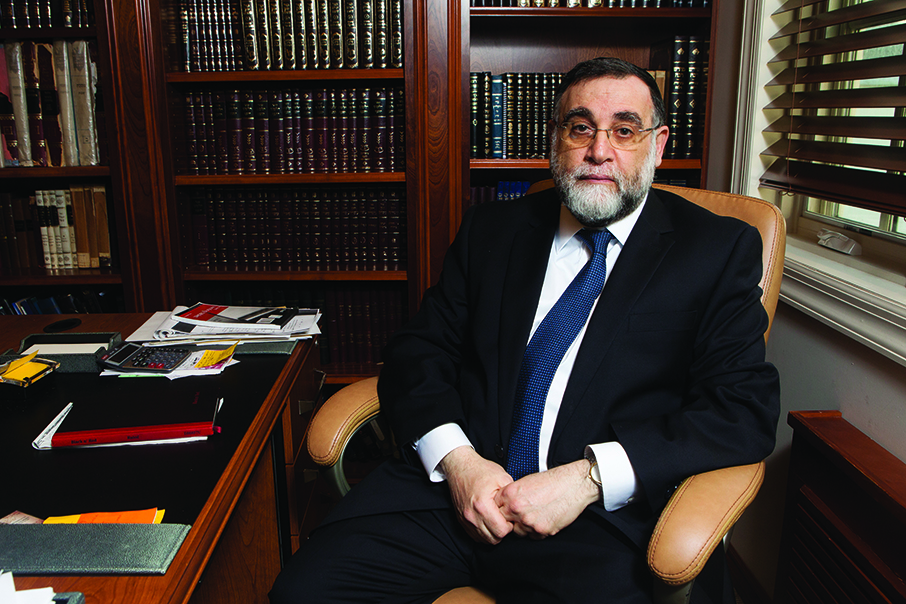
Reb David married the sister-in-law of Rav Yosef Harari-Raful, founder of the Ateret Torah network of Torah institutions, and when he emerged from ten years in kollel, the natural next step was to take a leadership role at Ateret.
Fifteen years ago, Rabbi Ozeri scaled back his involvement at Ateret to become the rav at the Yad Yosef Torah Center, which has enabled him to play a major role in the spiritual revitalization of the broader Syrian community. His home in the heart of the community is a central address for people seeking advice and assistance on a wide array of problems, from shalom bayis to shidduchim to parnassah to chinuch. He distributes upward of a million dollars in tzedakah funds to his community’s needy each year, including over $350,000 on Purim day alone.
“In regard to Torah observance, the community is growing by leaps and bounds,” he explains, noting that this is a very large community, between 70,000 and 75,000 people.
“There are many levels of observance, but everyone considers himself Orthodox,” he continues. “On the other hand, every family has some children or grandchildren that have taken the leap to become more frum. Today there are hundreds, maybe thousands, of women who cover their hair. There are thousands of men learning Gemara every day. It’s a different world than it was 25 years ago.
Create a free account to keep reading.