S ONG: “TEFILLAT KALLAH”
ALBUM: KOLOT — YAAKOV SHWEKEY
COMPOSER: ELI SCHWAB
YEAR: 2014
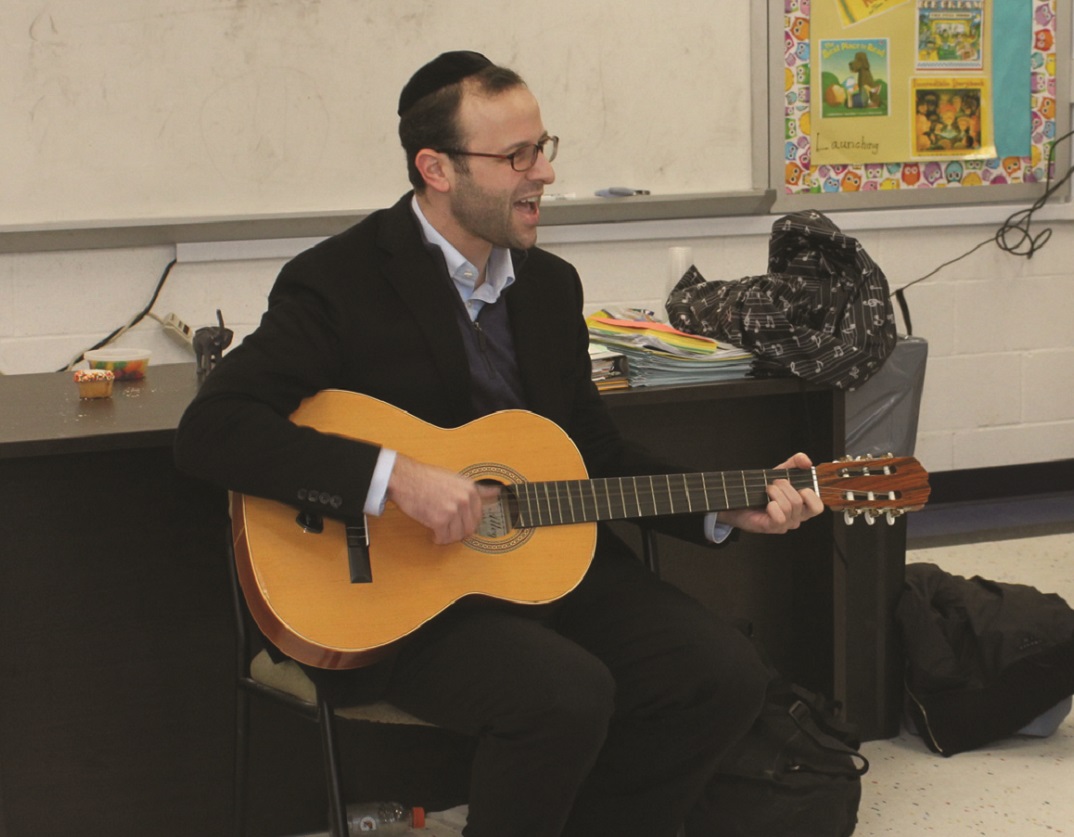
Whether the chuppah overlooks the beach at Caesarea or is under the open roof of a Lakewood hall a kallah’s heart is full of hopes and dreams — and prayer. When Eli Schwab sat down to compose a song that would capture this fervent mood he had in mind the entire spectrum of couples standing under the canopy k’das Moshe v’Yisrael.
“I designed the song to have as broad an appeal as possible from American yeshivish to nonobservant Israeli ” Eli says. “My hope was that secular Israelis might also connect to a theme of kedushah and taharah at their weddings. With that in mind I ran the lyrics by an Israeli chiloni friend to check that they wouldn’t sound ‘too dati’ or ‘too chareidi’ to a secular audience. He suggested that I leave out the word ‘taharah ’ but I decided that the song might have more siyata d’Shmaya with this concept included. Baruch Hashem ‘Tefillat Kallah’ has enhanced thousands of chuppahs and is starting to be heard outside of the traditional Jewish music audience. I hope it will continue to spread and inspire.”
The uplifting chorus of “Tefillat Kallah” — “T’zakeinu l’hakim bayit ne’eman bikedushah u’vetaharah l’avodatecha v’titein ahavah v’achvah v’shalom v’reut beineinu” — has reverberated at thousands of weddings since it was recorded by Yaakov Shwekey on his Kolot album in 2014. Like the opening lyrics which speak of the blissful yet humble gratitude a kallah feels the melody begins softly with awe and humility before G-d’s kindness and then rises into the chorus a heartfelt plea for this singular eis ratzon. It asks that Hashem bless the new couple with holiness purity and the traditional blessings of love brotherhood peace and friendship between them. It was Yossi Green a mentor on Schwab’s musical journey who listened to his first version and advised him to take the chorus right from the top of the musical scale allowing the song (and prayer) to soar.
The concept of a specific tefillah for a bride is not a novel one. As far back as the 18th century seforim record various techinos and prayers for a kallah to recite on this momentous day crystallizing her thanks hopes and dreams for her new home.