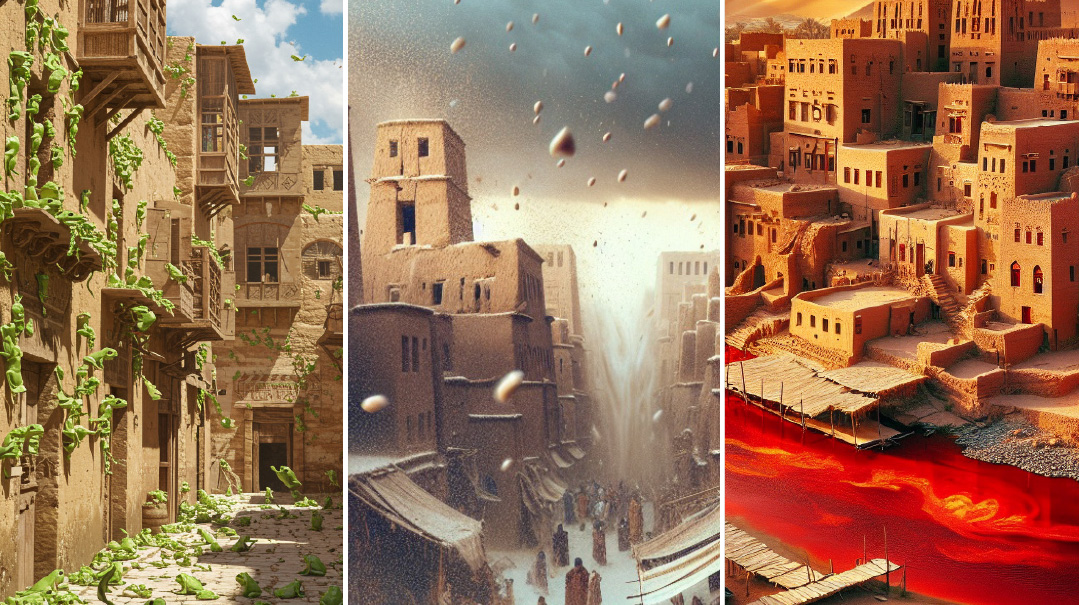
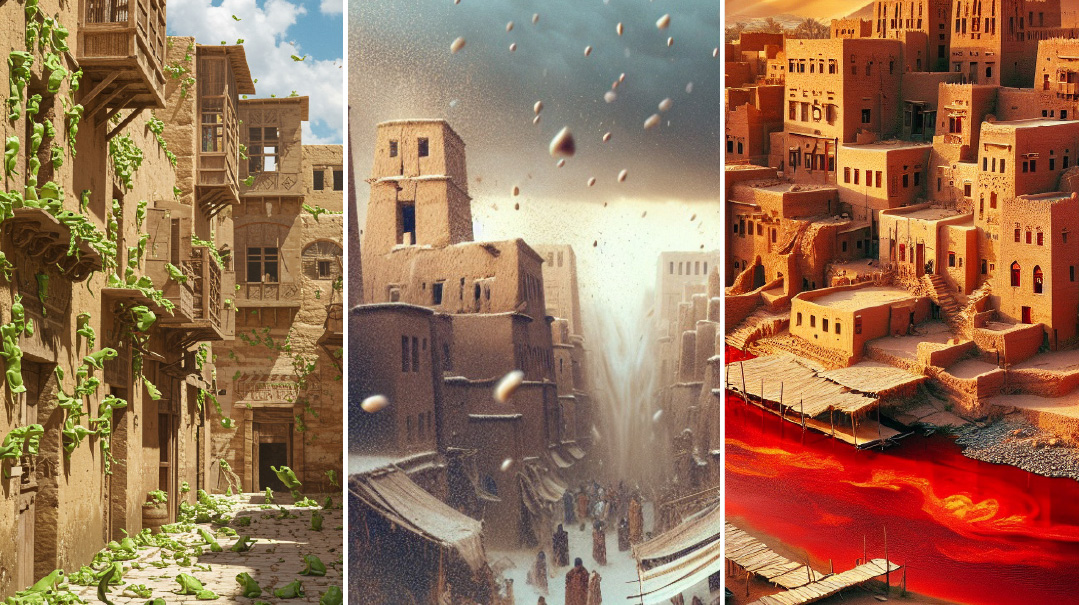
Contained within these ten plagues are deep secrets of the Creation
The second of the five Chumashim is today universally known as Sefer Shemos. But in the Rishonim, we find various other titles. The Ramban refers to it as Sefer Hageulah — the “Book of Redemption.” The Netziv (introduction to Ha’amek Davar, Sefer Shemos) quotes the Bahag (an acronym for “Baal Halachos Gedolos,” a halachic compendium dating back to the times of the Geonim), who titles it simply Sefer Sheini — the “Second Sefer.”
On a simple level, this title is most appropriate. Shemos is, in fact, the “Second Sefer.” But this very simplicity leads to the question — did the Bahag run out of ideas for names? The Bahag himself lists beautiful titles for each of the other four Chumashim. The first is Sefer Bereishis, the third is Sefer HaKohanim, the fourth is Chumash Hapekudim, and the fifth is Mishneh Torah. Why, then, would the Bahag opt for such a simplistic description of Shemos? The truth is that the Gemara (Sotah 36b) refers to Shefer Shemos as Sefer Sheini, so the question applies to the Gemara as well. Why such a bland title?
It would seem that beneath the humble veneer of the words “Sefer Sheini” must lie the very core of what Sefer Shemos is all about. How so? What could this mean?
The Midrash (Pesikta Zutrasi; Midrash Lekach Tov, Shemos 9:13) shares a cryptic teaching. Hashem smote the Mitzrim with Ten Makkos, says the Midrash, to punish them for enslaving Klal Yisrael, for whom the entire world was created — with ten utterances (as the Mishnah teaches in Pirkei Avos 5:1, “The world was created in ten utterances”).
Create a free account to keep reading.