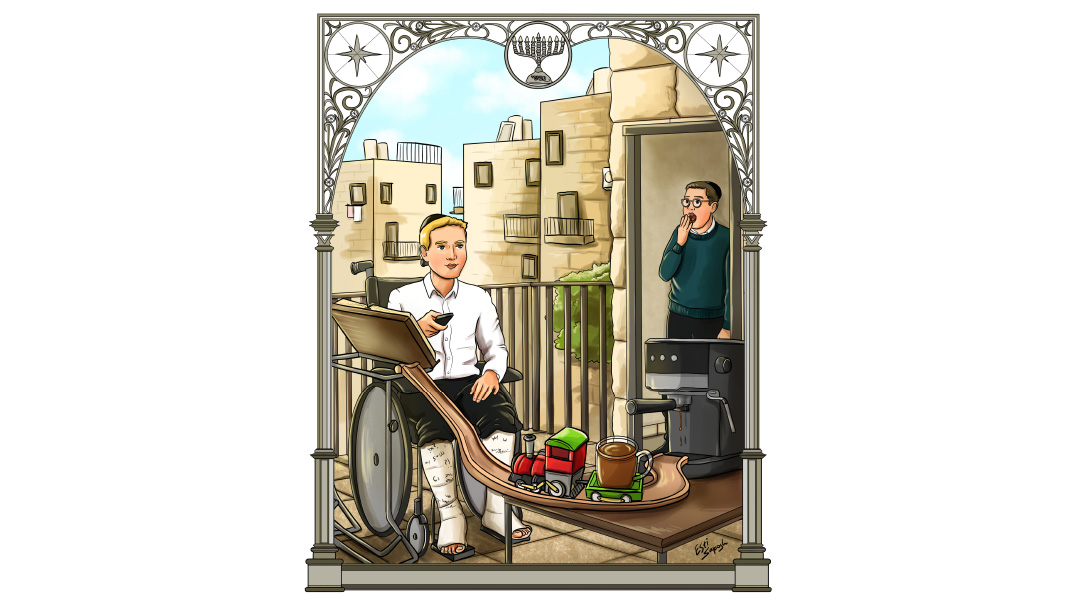
The letter didn’t just provoke thought— it stirred a memory of a good friend

Mishpacha receives many compelling letters every week, but not all of them make it into the allotted spots on the page. In one of those unpublished letters addressed to the magazine, Ira Buckman of Teaneck, New Jersey, writes that having recently made a simple, straightforward, and sincere request for forgiveness from someone he had offended led him to reflect on the rote requests for mechilah that friends, acquaintances, and relatives often make of each other at this time of the year. In the boilerplate version of “If there’s anything I’ve done this year to offend you, please be mochel me,” one rarely senses any real reflection, let alone remorse, behind those words. And so, predictably, the request begets only the equally formulaic response: “Of course. Are you mochel me?”
For his part, Mr. Buckman wrote, “Whenever a person lays the rote question on me, I respond, ‘I don’t know — what have you done to offend me?’ Invariably the person freezes. Sometimes he replies, ‘I don’t know — I haven’t really thought about it,’ to which I reply, ‘Well, you think about it and then let me know.’ On the first night of Rosh Hashanah I always make a verbal declaration granting mechilah to anyone who actually did offend me so that no one will be denied inscription in the Book of Life on my account.”
For me, the letter didn’t just provoke thought — it stirred a memory of a good friend, sorely missed. Rabbi Dovid Schwartz a”h, who was taken from us a year and a half ago, was a thinker who’d sometimes commit his thoughts to writing. Invariably, these were literary helpings born of a lively intellect, seasoned with zesty, authentic Yiddishe feeling and a dollop of bracing honesty.
IN AN ESSAY HE ONCE SHARED WITH ME about what he called “adult mechilah,” Reb Dovid wrote that he’d “always considered the most daunting vidui of Yom Hakadosh to be that of ‘For the sin of merely verbal confession.’ It is terrible to sin. Not bothering to do teshuvah for sins is even worse — but there is something morally monstrous about abusing teshuvah to the point where the teshuvah itself becomes a sin…. How many of the vidui’im that we repeat incessantly at this time of the year act as grease fires instead of fire extinguishers?”
Create a free account to keep reading.