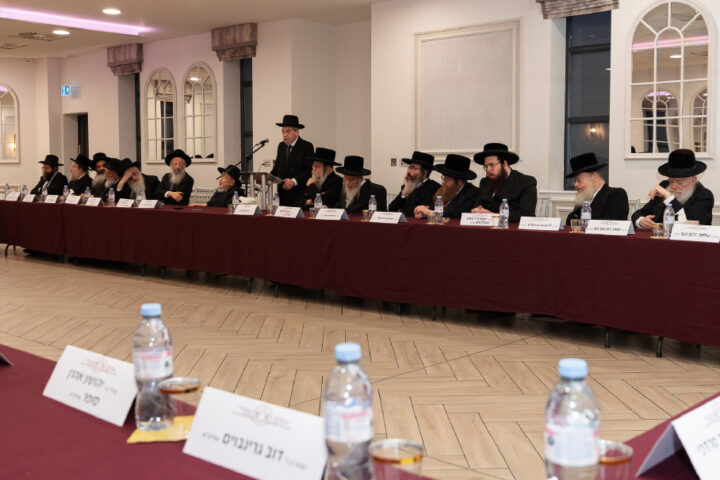
Today the custom of mitzvah tantz is still widespread and has even reached new communities. We caught up with five top international badchanim, who share their experiences and perspectives from the very heart of the Jewish wedding

Based in London
Badchan for 35 years
When you’re singing at the emotional peak of someone’s simchah, you have to make yourself part of the simchah. You have to feel it. And it’s not always easy. As a badchan, you have to switch off from your own life and put yourself into the simchah. Even if you’re not feeling well, each chasunah deserves a full motor.
One mechutan promised to pay me an extra 50% to do an entire mitzvah tantz in under 45 minutes, and I went all the way to America for that. If you ask me, there’s no point in cutting things short like that, but everyone has their own taste. At other times, I can finish a wedding at 8 a.m.
The wedding of my own daughter, and when I had the privilege of serving as badchan for my rebbe, the Belzer Rav, especially at the first wedding of the next generation of the Belz dynasty.
When I started out, there was a famed badchan in the US by the name of Reb Chaim Mendel Mermelstein. At that time, Reb Shulem Kester, the badchan in the court of the Bobover Rebbes, was just beginning, and Reb Chaim Mendel gave him this advice: “Don’t try to be Reb Chaim Mendel. If people want to hear me, they can hire me. Just be Reb Shulem Kester.” I would say the same — just be yourself, don’t mimic others.
Create a free account to keep reading.