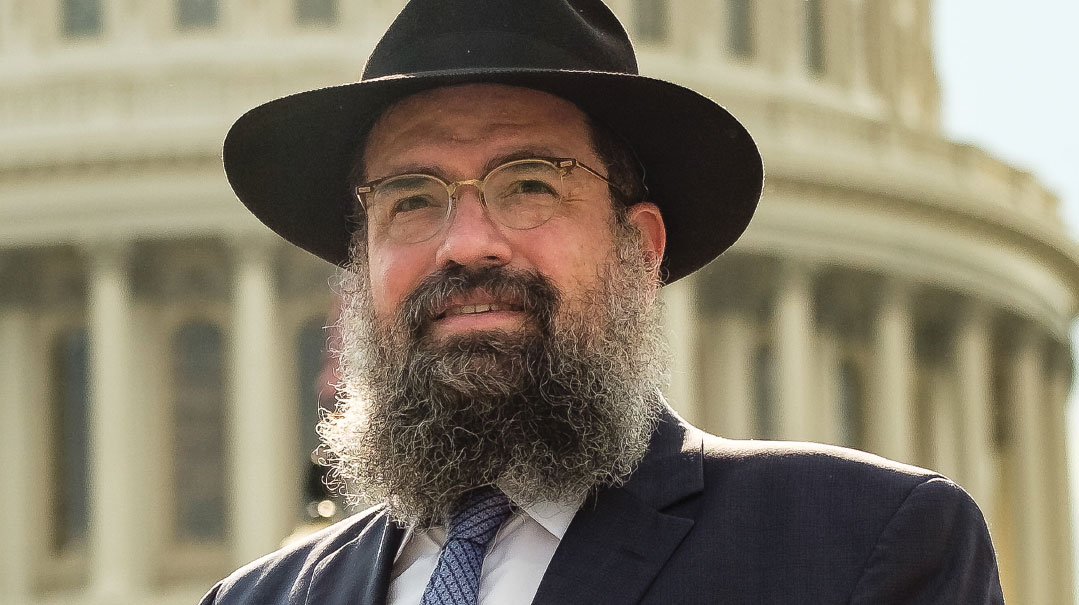
Chabad shaliach Rabbi Levi Shemtov straddles a bipartisan tightrope in a polarized capital

Rabbi Shemtov says the Kushners first came to the shul shortly after President Trump’s inauguration and he was immediately impressed by their humility. “They tend to avoid honors and just blend into the shul with the other mispallelim. They come in like everyone else [their significant security detail maintains a respectful distance], and make time to speak to everyone, and their children play with the other kids. They really don’t play up their status. And people appreciate that.”
It isn’t always easy to be a chassidic Jew in Washington, where there isn’t a large Orthodox community, but Rabbi Shemtov always dresses the part — in a suit and a hat — and is careful about halachah in every circumstance. That has led to a few amusing incidents.
Several years ago, during the Nine Days, Rabbi Shemtov was invited to a dinner at the home of one of the ambassadors in Washington. The catering for the entire meal would be mehadrin and the menu would include fish and chalav Yisrael dairy, enabling the rabbi to avoid eating meat during the Nine Days.
But a few days before the event, he was informed that he was expected to make a toast with the mevushal wine that the ambassador’s staff had ordered for the evening. What to do?
Create a free account to keep reading.