THE CURRENT → A FEW MINUTES WITH Issue 997 · January 31, 2024

The Source Is in Tehran

A few minutes with John Bolton:“Until Iran pays a price, there’s no chance for security in the region"
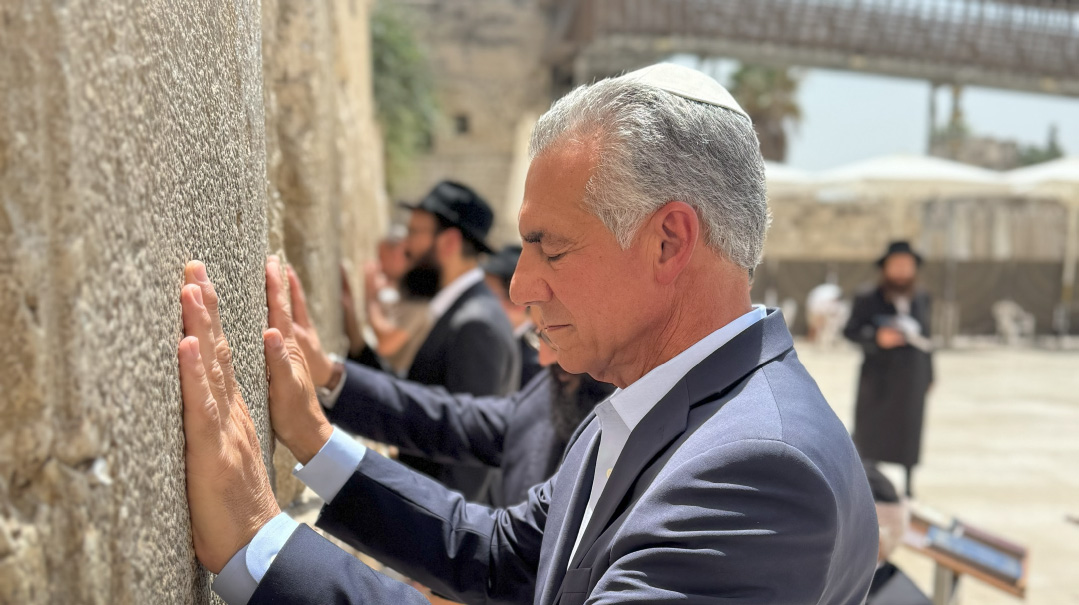
The Source Is in Tehran
Photo: AP Images
John Bolton has long been an outspoken conservative voice in American foreign policy, going all the way back to the Reagan administration. He served as the US ambassador to the United Nations during the administration of President George W. Bush, and was later the national security advisor to President Donald Trump.
Bolton has never been shy about expressing his antipathy for the Islamic Republic of Iran. His forthright opposition to the JCPOA (Joint Comprehensive Plan of Action, aka the “Iran nuclear deal”) negotiated by the Obama administration in 2015 eventually pushed Trump to withdraw from the agreement.
Bolton remains strident in calling for regime change in Tehran, and advocates direct military action against the ayatollahs — whether that action is taken by the US, or by Israel.
“A lot of people don’t like that conclusion,” he tells Mishpacha. “But I think it follows inexorably from the strategic logic we face.”
Bolton sat with Mishpacha for a conversation that ranged from how President Biden’s foreign policy is faring to how Israel advocates can better make their case.


What do you think about President Biden’s role in Israel’s war on Hamas? Prime Minister Netanyahu ceded a lot of decision-making to the Americans in the war. Is Biden’s vision for the region sound?

First of all, I think there’s an increasing split between the war cabinet in Jerusalem and the White House, notwithstanding Netanyahu’s political difficulties. This is my impression from the outside. Israel remains united in achieving the objective of eliminating Hamas as a military and political force. And if you don’t eliminate it, it’s going to come back to haunt you later.

What happened on October 7 is a terrible tragedy. It’s a tragedy that Hamas still holds over 120 hostages, and the security situation in the West Bank remains very difficult. But if Israel doesn’t carry through on its word with respect to Hamas, Iran will take that as a signal that it can apply pressure through the other terrorist groups.

And it’s amazing to me that after all this time, the White House answer to the current instability in the region is the two-state solution. I mean, this solution isn’t going to work. I think the two-state idea has been dead for a long time. But in the midst of this conflagration across the Middle East, to say we’re going to resolve the entire Arab-Israeli problem with the two-state solution just makes it even harder to get there.

The fact is that what happened with the Abraham Accords reflects the tectonic strategic shift in the region. The Gulf Arabs realized that they had a closer strategic alignment with Israel than they did with anybody else. They both saw Iran as the principal problem. That isn’t going to change.

Continue reading with Mishpacha.

Create a free account to keep reading.

Everything you need to stay close to Mishpacha.
← Previous installment Prof. Daniel Hershkowitz: Chareidim in Government Service  Next installment → A Few Minutes with Jason Greenblatt