“The covering of rams’ skins, dyed red, the covering of tachash skins…” (Shemos 39:34)
The Ohel Moed had four coverings. The lowest covering was made of ten strips, sewn and hooked together; the layer above it was made of eleven strips.
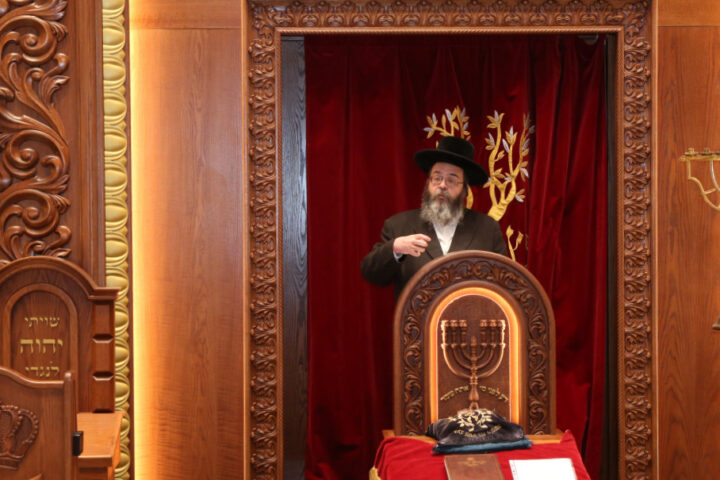
The number ten represents a high level of holiness (ten people necessary for the recital of special parts of tefillah). Thus, the ten-strip lower covering was perfect for covering the Mishkan, because it enveloped the whole structure with holiness. (Rabbi Nosson Greenberg, Khal Machzikei Torah)
When it comes to creating fancywork, I’m all left thumbs. I can envision exactly how I want my final project to look, but when my fingers try to execute that vision, the result looks like Shloime’s arts and crafts.
Ove the years I’ve come to terms with this. Whenever I’m tempted to venture into patchke land, I remind myself of my KISS motto: Keep It Super Simple.
Eleven, on the other hand represents tumah — impurity, which is inserted into the world by the yetzer hara. He tries to take the ten measures of holiness and overpower it with one more measure, leading to conflict and confusion. This second covering is a bone thrown by Hashem to the satan, allowing him a part of the holy Mishkan to prevent him from wanting to destroy it.
However, as much relevance as Hashem gives him, he remains a nonfactor — as symbolized by his covering being covered by another two layers.
When my first granddaughter was born this year (and my first girl in over two decades), I jumped straight into pink mode. Pacifiers, blankets, and stretchies all in the shade of posy-pink filled the house.
When my daughter asked me to host the kiddush for this little princess, I was thrilled. And also tempted to try to pull off a perfectly pink party.