NASA believes it’s time to revisit the moon
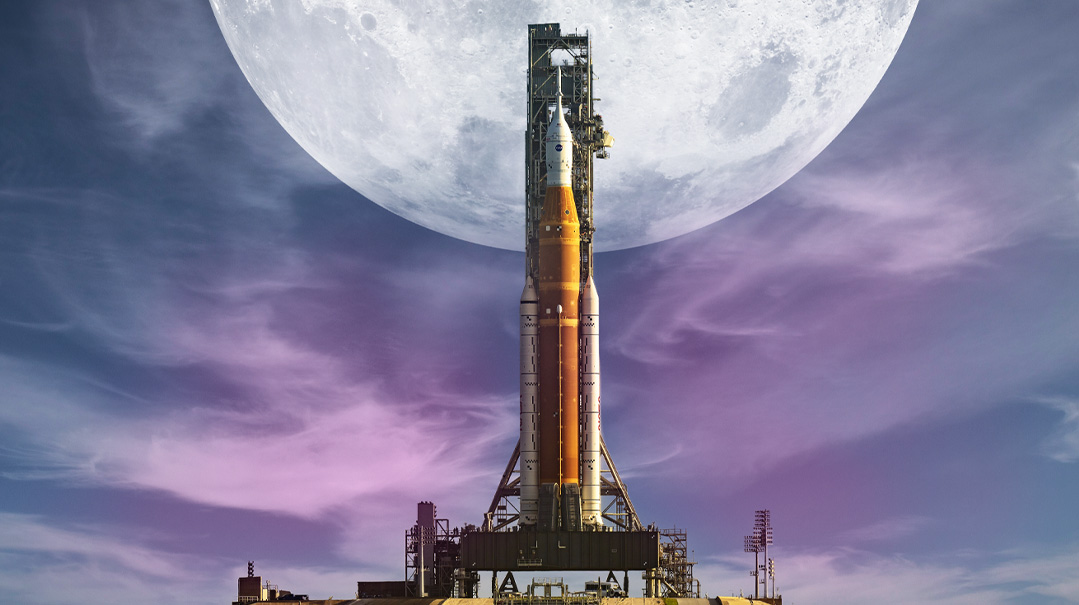
Imagine being the first human to walk where no man has walked before. Neil Armstrong did that when he stepped foot onto the moon in July 1969, famously declaring, “One small step for man, one giant leap for mankind.” The space missions, called “Apollo,” that sent man to the moon ran until 1972. They were cancelled because it was too expensive.
With the moon all but forgotten, NASA turned its attention to bigger and better things, like Mars, Jupiter, and Saturn. It’s not hard to figure out why the brainiacs at NASA lost interest in the moon. Which would you rather explore? A dull, grey, and desolate piece of rock, or a faraway red planet that’s supposedly full of extinct volcanoes and has its own seasons? (That’s Mars, by the way.) How about a planet that is so massive, it could fit 11 Earths? (That’s Jupiter.) And who could resist discovering more about Saturn’s beautiful rings of orbiting rock particles?
So, for decades, NASA was not particularly interested in the moon. Instead, they concentrated on building the Skylab. This was America’s first space station which was operational for all of 24 weeks, between 1973 and 1974. It wasn’t the greatest success, which is why NASA quickly moved on to the Space Shuttle program. Eventually they busied themselves with building the International Space Station (ISS), which welcomed its first astronauts in 2000.
In 2004, President George W. Bush felt it was time to take man back to the moon. This led to NASA creating the Constellation program, which aimed to have mankind on the moon by 2020.
Create a free account to keep reading.