Kiel's iconic menorah returns triumphant to Germany
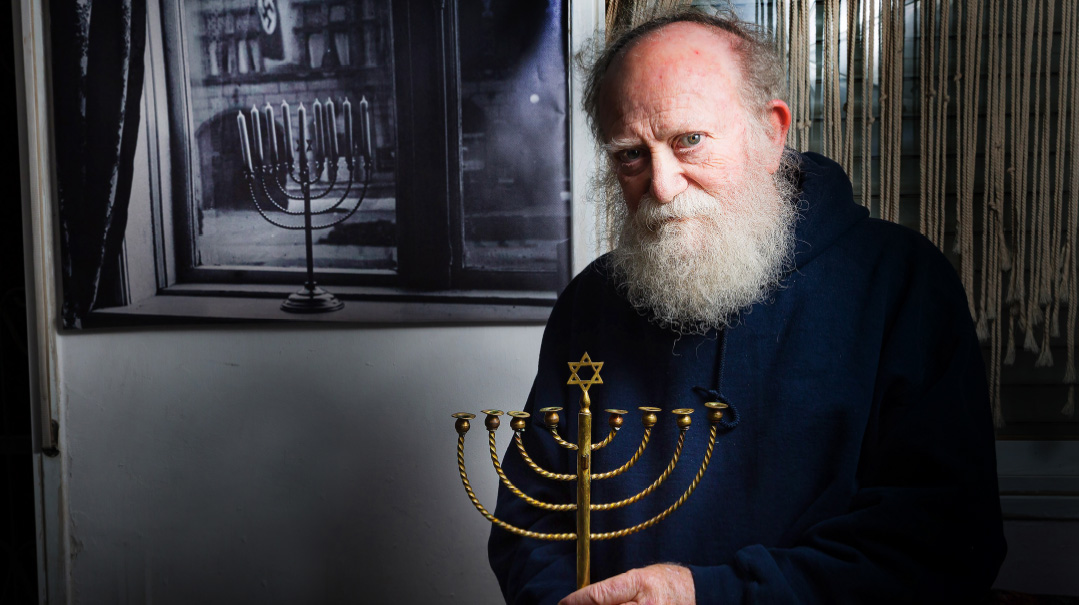
You’ve almost certainly seen the grainy black-and-white photograph.
A small, simple Chanukah menorah sits on a windowsill in Kiel, Germany. The year is 1931. Outside the window, across the street in front of the local Nazi party headquarters, hangs a banner emblazoned with a swastika.
This photo has become an iconic representation of the Chanukah message: the few, the small, against the many, the mighty. The picture is worth a thousand words. But this particular picture has words behind it: literally, in a message penned on the back of the photo, and figuratively, in the stories of the remarkable family behind it.
The backstory begins with Akiva Baruch Posner, born in 1890 near the border between Germany and Poland. The young man received semichah from Berlin’s eminent Beis Midrash l’Rabbonim and served as a chaplain in the Austro-Hungarian army during World War I. After the war, he earned a doctorate in Jewish history, and in 1924 he became the rav of Kiel, a large city in northern Germany, with a Jewish population of 500. There he met and married Rachel Wurzburg, who would go on to snap the historic photograph.
Create a free account to keep reading.