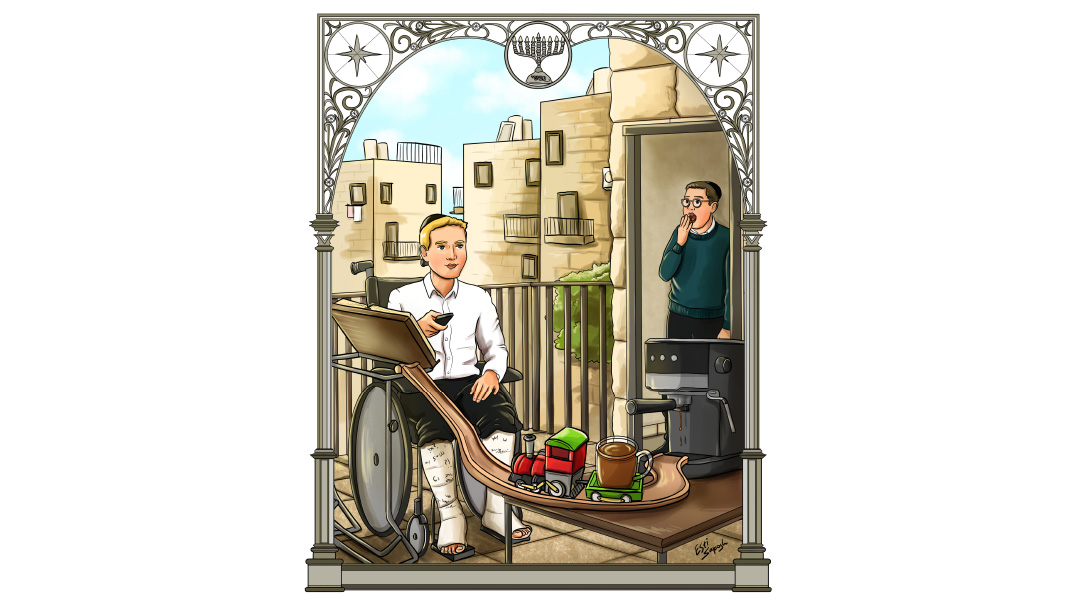
With several different minhagim about when music is prohibited during Sefirah, I’m always confused what to do when people make weddings at a time when our family keeps Sefirah


Prepared for print by Faigy Peritzman
There are different types of a cappella music. Some feature recordings of plain solo singing, and since there is no direct prohibition against singing during Sefirah, this type of music is permitted by some poskim. The other type of a cappella music features recordings of singing accompanied by man-made sound effects that are almost indistinguishable from the sounds made by musical instruments. This type of a cappella music is forbidden to be played during Sefirah according to all opinions.
If you’re planning for your son to become a professional musician, which will be the source of his livelihood, then it would be permitted for him to continue his lessons during Sefirah and the Three Weeks until Rosh Chodesh Av. Likewise, if the purpose of the lessons is therapeutic, e.g., to ease or alleviate anxiety or depression, it may be continued. In most cases, however, when music lessons for children are merely for the sake of entertainment or talent development, it would be appropriate to take a break and resume those lessons after Sefirah and the Three Weeks are over.
If, indeed, your exercise program is for health reasons, and without music you would not exercise, or would not exercise as well, then it’s permitted for you to exercise with music. After Rosh Chodesh Av this should be limited or curtailed.
The custom today follows the opinion of the poskim who hold that it is permitted to attend and dance at the wedding of a chassan and kallah whose families keep a different minhag of Sefirah restrictions.
Create a free account to keep reading.