The dedicated rebuilders of Jewish communities in Ukraine are facing the biggest challenge of their lives
When Rav Shlomo Baksht took on the challenge to relocate from Jerusalem to Odessa in 1993, there was little reason to be optimistic. The synagogue building had recently collapsed, and kosher food was little more than a fond memory from nearly a century before. There was no mikveh, no shochet, and little to suggest the community could be brought back to life. What Odessa did have, however, were 40,000 Jews — 80,000 if you counted the Odessa province, an area slightly smaller than Israel. So Rav Baksht took a leave of absence from his position as a rosh kollel for a year to see what could be done — and nearly three decades later, Odessa became a thriving Jewish city by any standard.
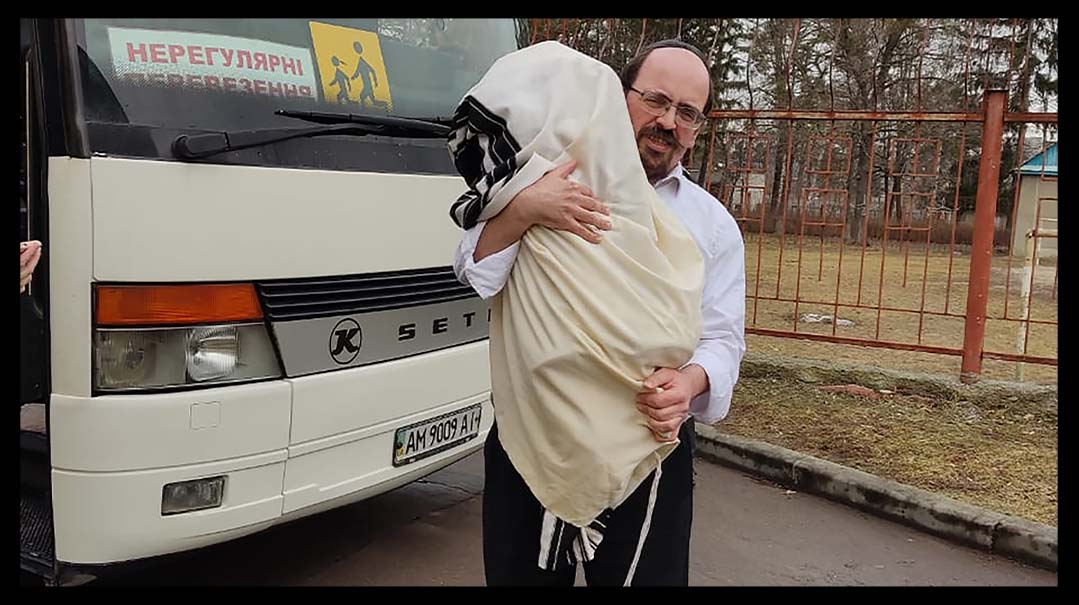
Last Shabbos, though, members of Rav Baksht’s kehillah, his partner Rav Refael Kruskal, and the 250 children in the three orphanages they head, were on the run.
Over Shabbos, a convoy of buses with hundreds of refugees from the Jewish community of Odessa travelled toward the Carpathian Mountains that border western Ukraine.
Rav Baksht, 62, chief rabbi of Odessa and head of the Orthodox kehillah, told Mishpacha that until last Thursday, he relied on assessments by the community’s private security company that even if Russian president Vladimir Putin did invade Ukraine, Odessa would be safe from attack, at least initially. He even told international media outlets that he was staying put. But within a few hours, all that changed.
Create a free account to keep reading.