Israel is keenly aware of what it means to do all the giving and get nothing in return
Imagine a country with vulnerable boundaries, unprotected by formal military alliances, and engaged in an ongoing conflict with neighboring nations.
That picture accurately describes Ukraine’s dilemma, but Israel shares a similar predicament.
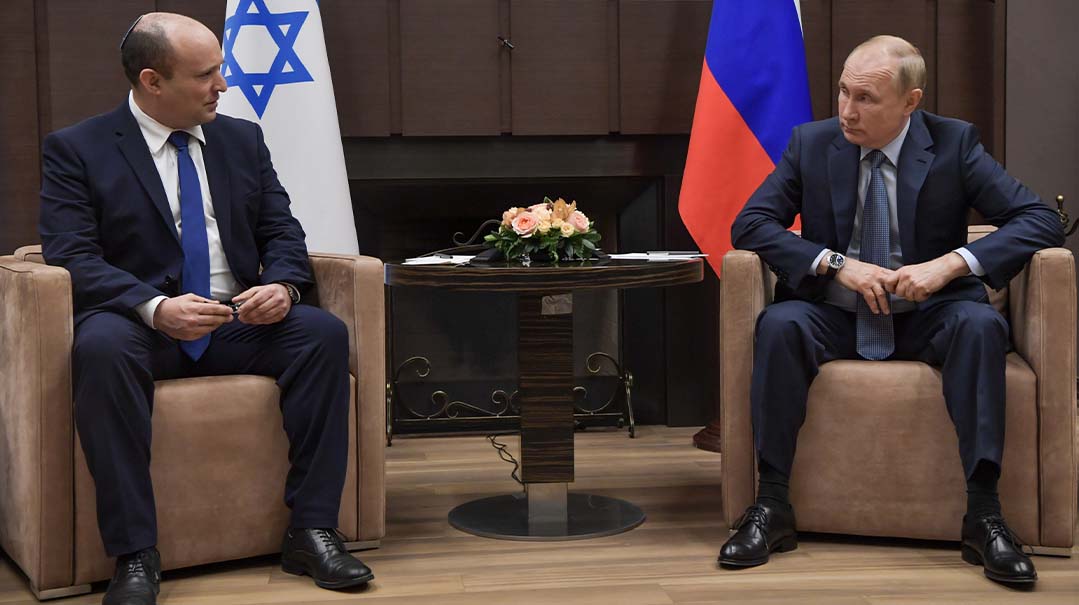
The Israeli government has carefully maintained its neutrality in a conflict between Russia and Ukraine, two nations that both host sizable Jewish populations. Foreign Minister Yair Lapid did issue a tepid condemnation of Russian military action, aimed at appeasing American ears, while Prime Minister Naftali Bennett, who has to deal directly with Vladimir Putin, kept mum. However, Israel is viewing the fate of Ukraine and its Jewish population with great concern, and needs to process the lessons from Russia’s massive attack.
Russia has violated Ukraine’s borders repeatedly in the last decade. In recognizing two pro-Moscow breakaway republics on Ukrainian soil, and launching last week’s invasion, Russia effectively abrogated an international agreement overseen by Europe — the Minsk Protocols. The Organization for Security and Cooperation in Europe (OSCE) has been monitoring compliance with the agreement since it was signed in two stages, in 2014 and 2015, and it has recorded hundreds of Russian violations. Minsk is a model of a flawed agreement that one party felt free to interpret as it wished.
Create a free account to keep reading.