Despite economic pain, an ancient Jewish community is holding on
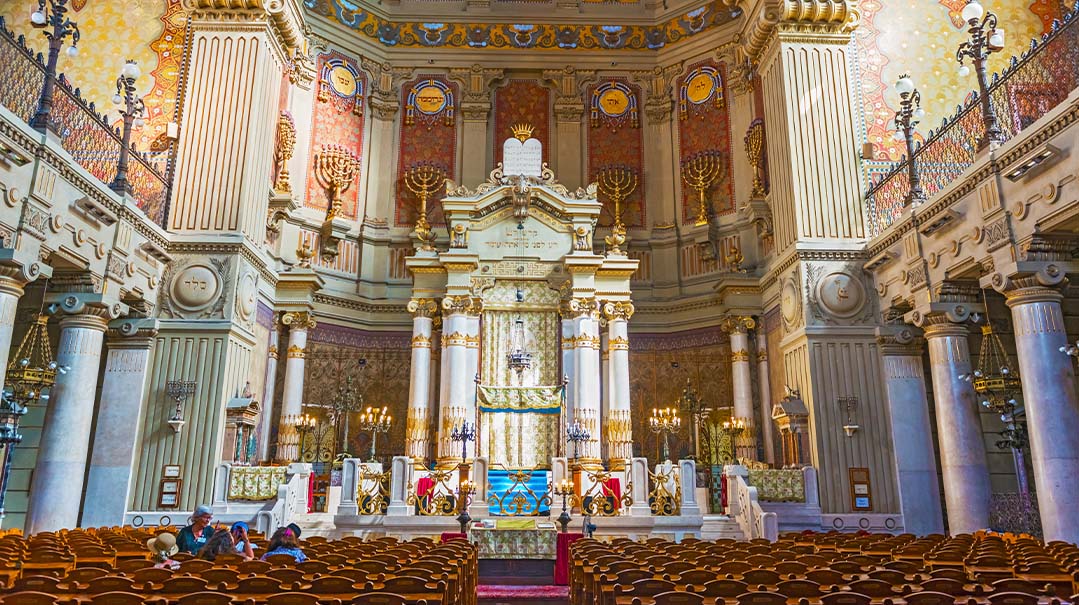
In the first months of the pandemic, Israeli health experts, as well as senior health officials in New York, both groups of whom were pushing for a blanket closure of shuls, pointed to the “Italian model” of shutting down all places of prayer. But the treasurer of the Great Synagogue of Rome, Yaakov “Manu” Tzarfati, paints a different picture.
I met up with Manu Tzarfati and his son Marco at the gates to what many consider the most magnificent shul in the world. It stands at the entrance to the Jewish ghetto in the city, on the banks of the Tiber. In this city of conical spires, the synagogue’s imposing square aluminum dome stands out on the Roman skyline like a kippah in a crowd. The interior of the building is no less breathtaking than the façade, its spacious high-ceilinged sanctuary decorated with golden menorahs, cornices, reliefs, and paintings.
“We didn’t close the shul,” the treasurer Tzarfati reveals. “We didn’t let tourists in, but they had stopped coming anyway. We members of the kehillah continued davening here every Shabbos. We socially distanced, wore masks, but we didn’t cut ourselves off from our shul, from the beating heart of our community.”
The proud Jewish community was caught up in a crisis on an unprecedented scale. Covid struck Italy before the world had learned how to deal with the virus — either healthwise or in terms of the economy. The tourist trade, Italy’s bread and butter, died overnight. And if this applied to Italy in general, all the more so to Rome, the heart of the nation’s hospitality industry.
Create a free account to keep reading.