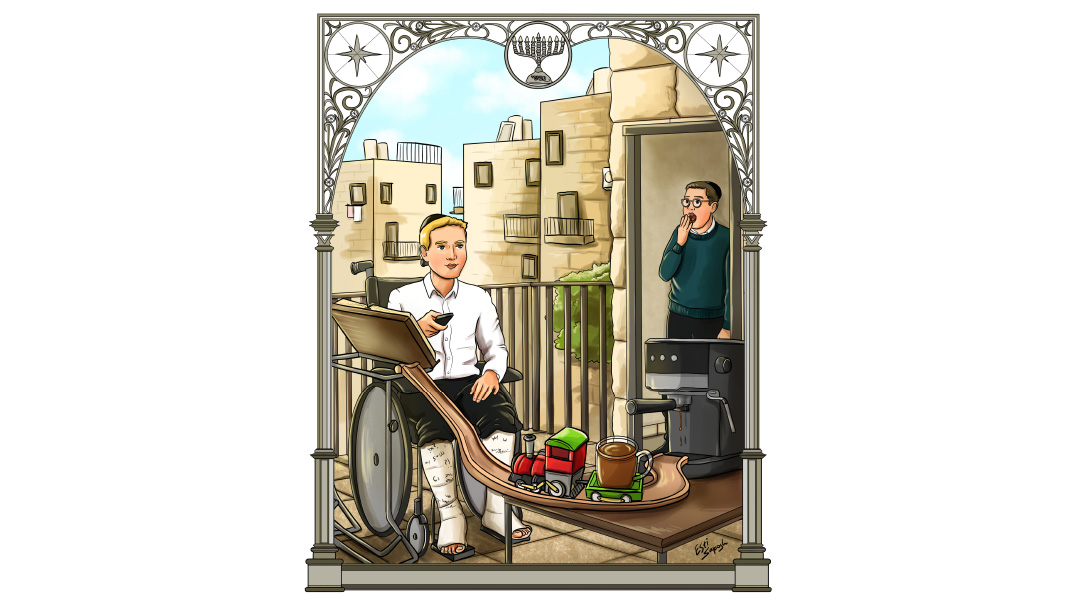
While today’s “millennials” are consumed with personal family demands and financial worries, are we losing the culture of public askanus that has shaped our communities for the last half a century?

A violinist provides background music to the low hum of conversation as tuxedoed waiters circulate, offering mini-eggrolls from a tray. Meir Pfeffer greets attendees with the proprietary air of a baal simchah.
The 58-year-old accountant is the chairman of tonight’s dinner. He’s been serving in that role for three decades. Pfeffer wears a new shirt, the creases still visible, and his smile is wide and welcoming as he works the room, dropping a steady stream of good-to-see-yous and thanks-for-making-its. Despite the festive air he projects, there is something not quite right in his expression.
During a quiet moment, he rests an elbow on the polished wood of the curved bar. “There was a time,” he tells me, “when a dinner was an event! People cared. They left work a bit earlier, they changed their clothing and showered, waited for the babysitter and headed out together with their wives. They had fun, they enjoyed the food and company, they listened to the speeches and responded generously. The next morning, they discussed the speakers, the main course, and most importantly, the cause.”
Pfeffer pauses to clutch the hand of a new arrival, then continues. “Today, we’re fortunate if they come at all — forget about getting them to actually think about the cause, or take a moment to care. There are three dinners a night, and everyone is busy with the kids’ homework and chavrusas. They’re out of here after 20 minutes and by the next morning, they don’t even remember that they were here at all.”
Create a free account to keep reading.