No other kvittlach collection of this size and scope is known to exist
—Kvittel submitted to Rav Eliyahu Guttmacher; YIVO collection
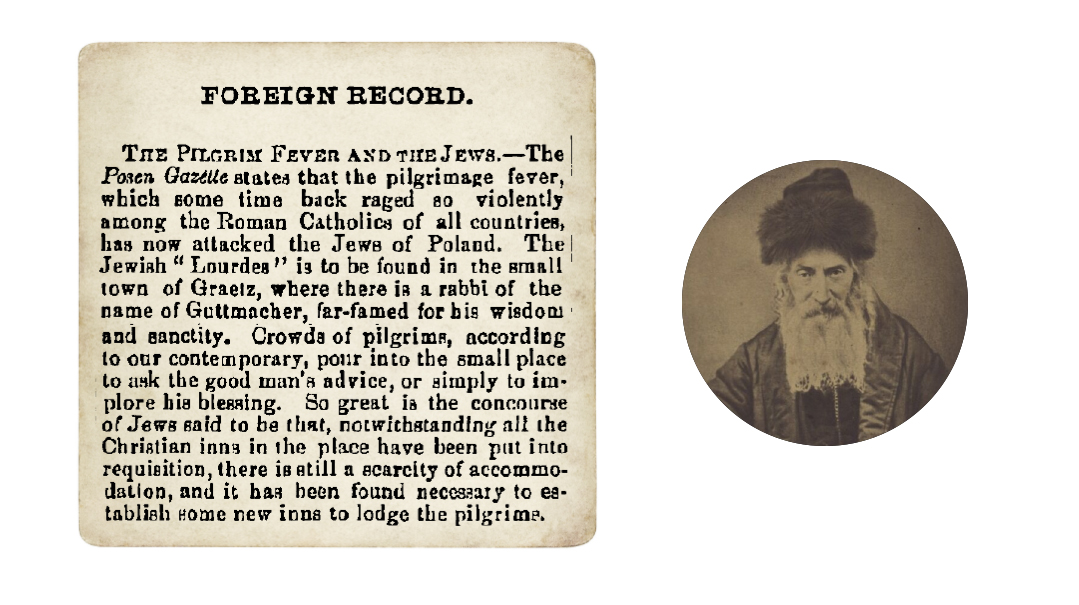
Community rabbi, Torah scholar, author of acclaimed holy works, posek, kabbalist, mystic, pioneering proponent of renewing Jewish settlement in the Land of Israel, Rav Eliyahu Guttmacher (1796–1874) was active in multiple arenas over the decades of his rabbinical leadership. A curious aspect of his interaction with followers was discovered in 1932: a cache of more than 5,000 kvittlach in the Polish town of Grodzisk Wielkopolski (Gratz in German, Graditz in Yiddish). The trove was deposited then at YIVO in Vilna; it somehow survived the war and is now stored in YIVO in New York.
No other kvittlach collection of this size and scope is known to exist. Despite his not being a chassidic rebbe of any sort — he was actually a German rabbi — he received petitions from all over, although most came from Eastern Europe. This incredible resource provides a window into the everyday lives of the men and women who comprised 19th-century Eastern European Jewry. It provides intimate details of family life, economics, how people related with non-Jewish surroundings, taxes and government, inter-Jewish politics, and religious life.
Not surprisingly, the most frequent requests mention banei, chayei, mezonei (offspring, health, and financial security): childbirth, infant mortality, shidduchim, marriage, paying for weddings, marital strife, divorce, and interactions with non-Jewish or Jewish business competitors.
Create a free account to keep reading.