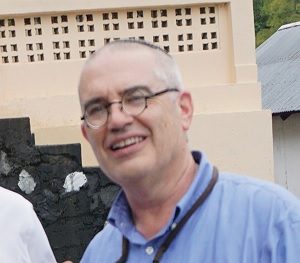
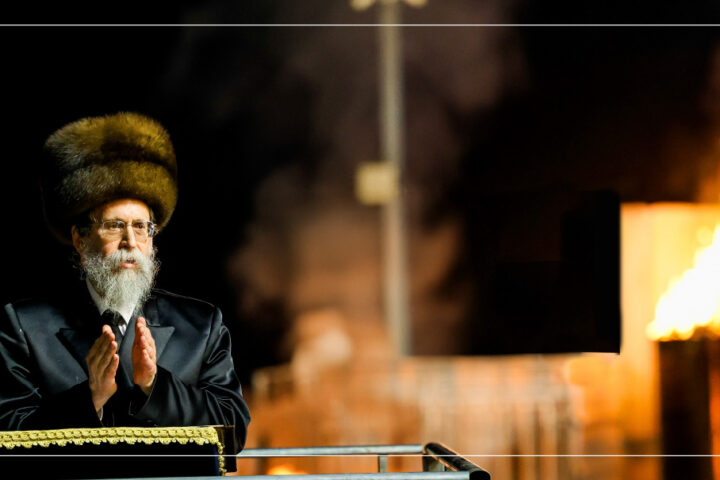
We got raised eyebrows as we boarded a plane to Iraq, yet Kurdistan proved to be a welcoming, friendly place where our yarmulkes elicited comments such as “We love Jews.”
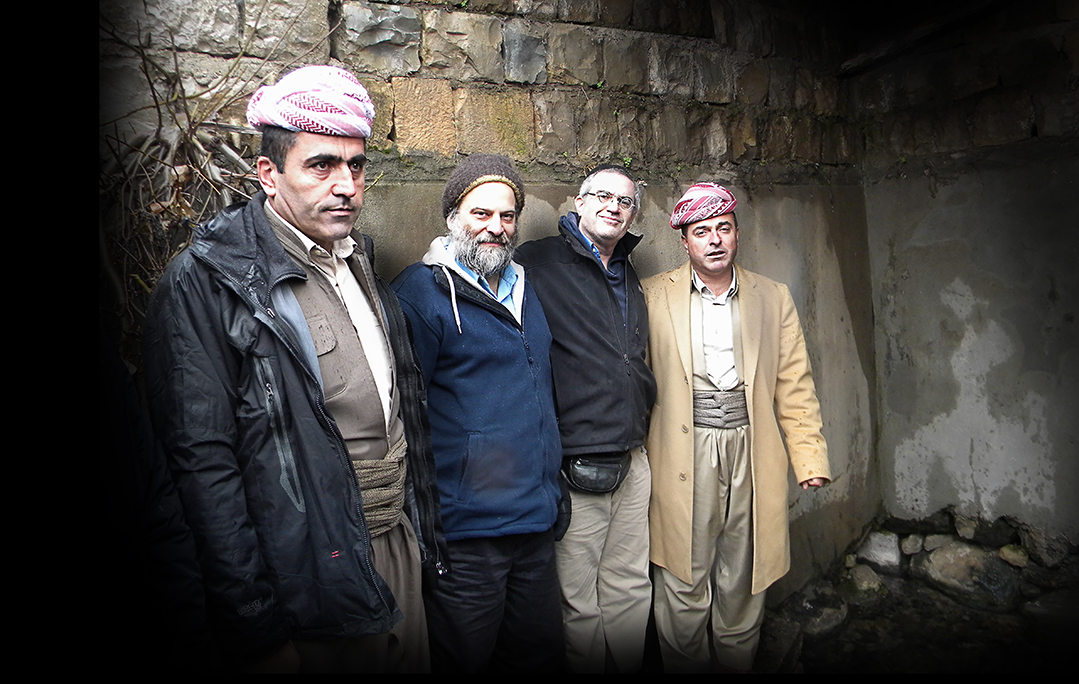
For those of us living in the West, Iraq conjures images of perpetual war and incessant terror attacks. There was Saddam Hussein, the Iraq-Iran war, the US-led invasion of Iraq, as well as the subsequent power vacuum and the lightning-fast emergence of the deadly ISIS. Yet our back-channel investigations and research with various security organizations told us that safety in Kurdistan — even wearing our kippot publicly — was not a concern despite it being in Iraq.
Well, even if walking the Kurdish streets was safe, we still had to decide to either fly via Jordan and over ISIS-controlled areas or via Turkey. Despite the decades-long tensions between Turkey and Kurdistan — the Kurdistan Workers Party or PKK, a terrorist organization engaged in an ongoing militant struggle against the Turkish government for an independent Kurdistan on Turkish soil and last year alone Turkey killed more than 3,000 Kurds — Turkish Air still flies there frequently, and so we set off from Tel Aviv to Istanbul.
Because our time on the ground was quite limited, we quickly realized in planning our itinerary that we’d need a local expert to facilitate our meeting with relevant people and to get from place to place efficiently during a very short visit. We discovered that a local leading authority on Kurdish Jewry is a woman named Judit Neurink, a Dutch journalist and writer who has lived in Iraqi Kurdistan for the past eight years, became intrigued with Kurdish Jewish history and even wrote a novel about the Jewish heritage Kurdistan. It turns out that her services were indispensable in helping us hit the ground running for the short time we were in this country of conflicts.
Although there are approximately 30 million Kurds in the Middle East, forming minority populations in Turkey, Iran, Iraq, and Syria, there has never been a modern independent Kurdish state. While the vast majority of Kurds are Muslim, there are also Christians and Jews along with several other minorities, such as Zoroastrians, Yazidis, Bahais, and other small groups. Kurdistan is a tough neighborhood, and, as the locals told us, “at least you have the Mediterranean on one of your borders.” What they meant was that both Israel and Iraqi Kurdistan are surrounded by hostile countries, but at least the sea is not an aggressive neighbor, while Iraqi Kurdistan is bordered by the anti-Kurdish Turkey, Syria, Iraq, ISIS, and Iran.
Create a free account to keep reading.