"His songs have a wide spectrum of listeners, spanning decades of music while still sounding fresh and current"
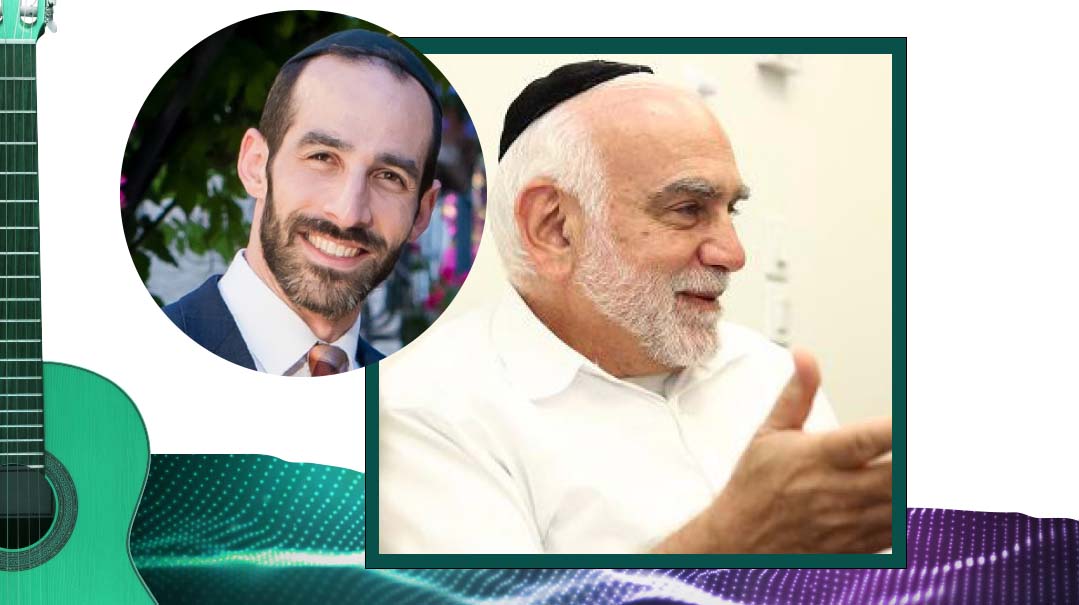
Having Rabbi Baruch Chait — such a profoundly-connected talmid chacham and baal menagen — join us in our humble succah would be an honor and a delight. His music and musical style — kumzitz meets mainstream — is universally embraced. His songs have a wide spectrum of listeners, spanning decades of music while still sounding fresh and current. The slow songs make you sway, the fast songs make you clap and sing along. On a personal level, I grew up on The Rabbis’ Sons records. From the group concept of The Rabbis’ Sons over half a century ago the broadening of horizons with the Eastern influence of Kol Salonika and further, I could write a list of reasons why I think Rabbi Baruch Chait is one of the most iconic personalities in Jewish music.
When did you know that you could compose melodies? Was it a sudden realization or did you always know that you could?
When I was 16 or 17, inspired by Shlomo Carlebach, I remember having the tune of “Rabbos Machshavos” in my head. I didn’t know if it was original, or if I’d heard it somewhere. I sang it to someone I trusted, and he said, “I never heard that before,” so I knew I must have composed it. A friend of mine added the words
What was your very first composition?
I think “Rabbos Machshavos” was the first one of any consequence. But “Mi Ha’ish” became known first, because it was released on the first Pirchei record. For “Mi Ha’ish,” the high part of the song came to me first, which was unusual. Again, I wasn’t sure if I had composed it or heard it someplace, but a friend told me it was original.
Create a free account to keep reading.