Genealogist Eric Feinstein’s meticulous sleuthing and a never-give-up attitude has uncovered family connections his clients didn’t even know existed
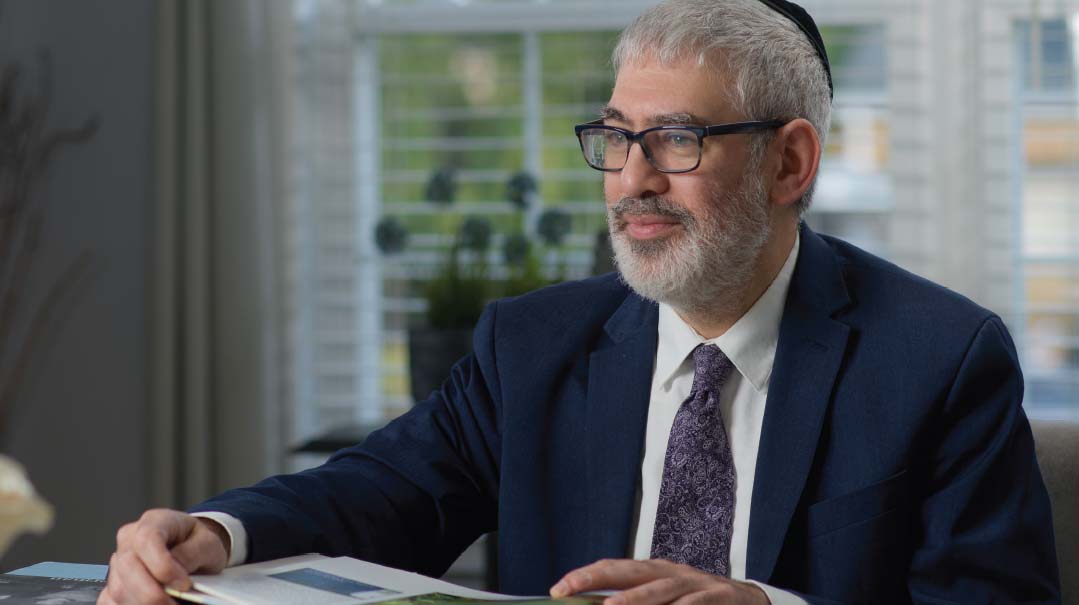
Photos: Naftoli Goldgrab
What does the past mean to you?
Many of us know or remember our grandparents, but what of their parents? And what of the brothers, sisters, aunts, and uncles that were a part of their lives — and by extension — a part of ours too? To some, discovering their family roots can satisfy a deep need, provide closure, or may even open new avenues for their future. Genealogist Eric Feinstein is in the business of discovering family histories and unveiling the journeys, joys, and mysteries of those who came before us.
“Not everyone has progeny, but everyone has ancestors,” he says, explaining the upsurge in interest in genealogical services. “Everyone comes from someone.”
Specializing in European archival research, Eric is able to research and document his clients’ family histories by recovering original source documents from the past, including birth, death, and marriage records, community registers, and city and town archives. His fluency in Russian, French, and German, with a working reading proficiency in Polish, Hungarian, Czech, and other Slavic languages, gives him first-hand access to the most obscure pieces of information. He also utilizes a network of researchers around the world who can track down records, physically search and document graveyards and archives, and uncover information that is unavailable online. His research, coupled with meticulous sleuthing and a never-give-up attitude, has united family members lost to one another by the Holocaust, found birth families of adopted children, and discovered relatives that his clients didn’t even know existed.
To begin the process of tracing a client’s roots, Eric will have the client write down any details — names, dates, and relationships — that they know of, even if they don’t think of them as important. These details are anecdotal, but he’ll follow up on them and try to substantiate them with actual documentation. Often when he begins a project, he will only be able to draw one line on a family tree. As his research progresses, he’ll be able to add more branches, moving upward through the generations, with all the names and dates supported by the documents he has discovered. The second step is to reach out to all relatives the client is aware of, even if they’re complete strangers. Many times, the client is reluctant and will ask Eric to do that piece instead.
Create a free account to keep reading.