Welcome to India of 2016 and how the incongruity of modernity and old-world behaviors affect this nation of over 1 billion people.
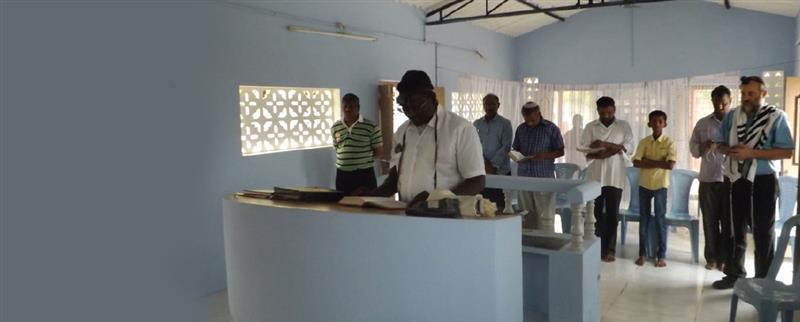

In the Bnei Ephraim house of worship Ari G. takes a paper Torah from the aron kodesh. It may not be halachic but it’s a symbol of passionate allegiance.
It was an incongruous scene. Here we were looking at a huge modern sugar factory set back among miles of rice paddies being stocked with sugarcane. But there were no sophisticated tractor-trailers for transporting the crop — instead there were small lumbering bull-drawn carriages with a driver holding a whip sitting high atop piles of the cane. Our escort explained to us that the factory is actually cutting edge but that if the cane would no longer be brought by these small carriages many people would lose their jobs. Welcome to India of 2016 and how the incongruity of modernity and old-world behaviors affect this nation of over 1 billion people.
Our guide knows all too well about this phenomenon of old and new existing side by side. Because he’s part of an old-new group who call themselves Telugu Jews. Tucked away in the southeast of this massive subcontinent where Telugu is the spoken language is a small and largely unknown community who claims descent from the lost tribe of Ephraim — the self-proclaimed Bnei Ephraim or Telugu Jews.
The story of this community is truly remarkable and what they lack in contact with other Jews they are compensating for with effort and desire. The core of the congregation is really just one family — the family of Shmuel Yacobi and his brother Sadok.
Create a free account to keep reading.