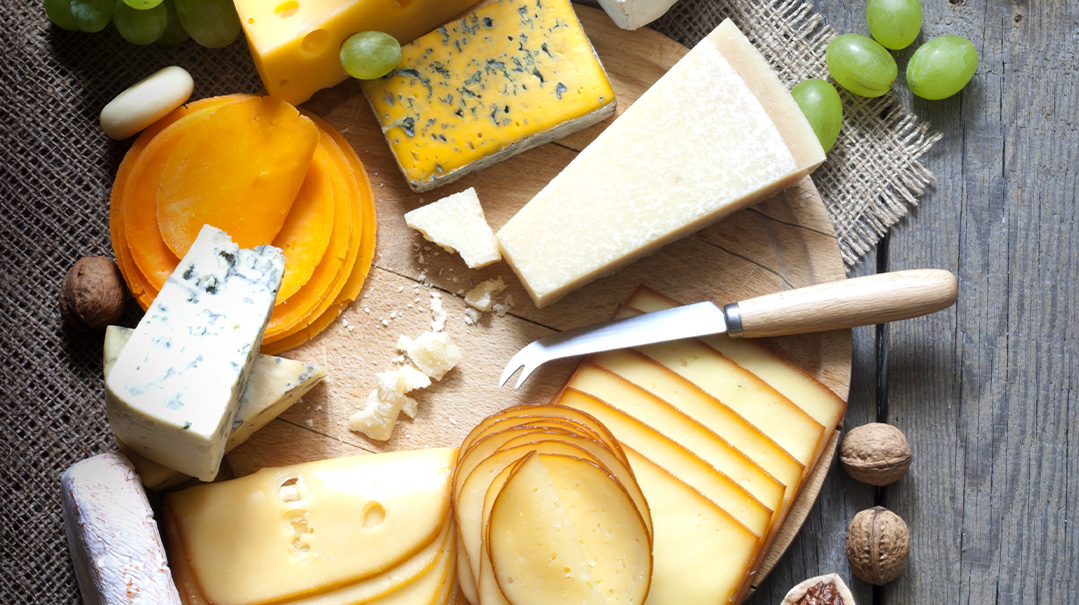
I learned the differences between ricotta, farmer cheese, and quark — and how to make each of them at home, if I were so inclined (probably not in this lifetime). I watched full-fat and reduced-fat milks bubble and curdle, harden, and then soften into creamy, fresh cheeses. I learned that temperature and acidity matter, and that milk source is everything — don’t interchange cow’s milk with goat or sheep milk unless you’re prepared for a vastly different flavor.
I was surprised to discover that muenster, one of the most popular and versatile semi-soft cheeses, was developed by French immigrants to Wisconsin in the early 1900s — around the same time my own great-grandfather emigrated there from Poland (which means we can’t claim muenster as a family legacy). Their recreation of the original French version uses annatto coloring to yield the now easily recognizable reddish orange rind.
In this article we’ll cover soft and semi-soft cheeses — those that don’t need months to age, ripen, grow bacteria, or any of the other uber-cool techniques that affineurs (cheese refiners) use to produce their gourmet, funky-flavored hard cheeses. For serious foodies, high-quality fresh cheeses are best eaten within hours of making them. The rest of the world is satisfied with the grocery store variety that gives us a full two weeks to get our act together and use it up.
Soft and semi-soft cheeses are your tried-and-true buds in the kitchen — perfect for lasagna, stuffed shells, dips, sauces, spreads, and snacks. They bake beautifully into savory and sweet dishes, melt smoothly into alfredo sauces and pancake batter, and spread neatly over crackers, bagels, and veggie sticks. But do remember — all cheeses have super-high
sodium content, some containing more than the recommended daily intake per serving! So use them sparingly, and, to keep things balanced and healthy, avoid adding extra salt to dishes that contain cheese.
Create a free account to keep reading.