Chazal teach that there are worthwhile spiritual insights to be gained from studying earthly kingship
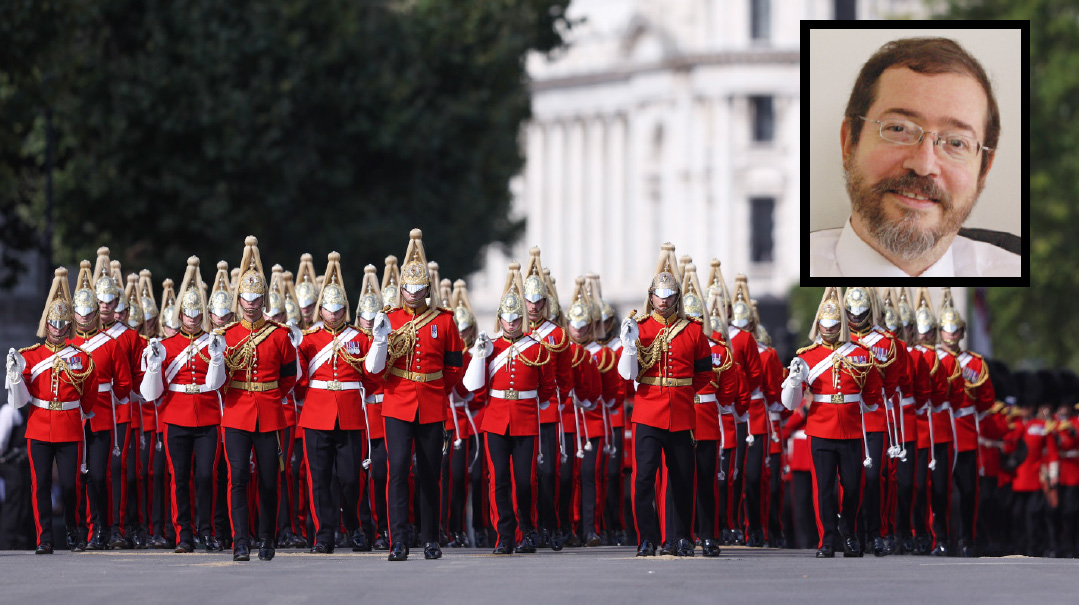
Many of us were doubtless struck, in these days leading up to Rosh Hashanah, by the timely convergence: Just as we prepare to once again coronate the King of All Kings with our shofar and machzorim, and above all our hearts, across the pond in Britain, a new flesh-and-blood king has taken the throne of the world’s most famous monarchy upon the passing of his mother, Queen Elizabeth II.
Speaking for myself, I felt the slightest chill down my spine as I read of how, on the day after the queen’s death, a proclamation declaring Charles III’s reign was to be read by heralds arriving to London’s Trafalgar Square on horseback, wearing uniforms harking back to the Middle Ages. Two days later, the report continued, “the proclamation will be read out in ceremonial fashion in capitals across the United Kingdom… and later, high sheriffs in traditional garb will declare the news in towns and villages across the country.”
Why, here in 2022, was a scene out of 1022 — one I’d only encountered in Marcus Lehmann novels (okay, Shmuel Kunda tapes too). For me, it brought alive the halachah (see Mishnah Berurah, Orach Chaim 61:4) that directs us to recite Krias Shema twice daily as if it were a royal proclamation that’s just been posted in the village square, with all the townsfolk gathering round to read the sovereign’s commands slowly and carefully, with trembling and awe.
Chazal teach that there are worthwhile spiritual insights to be gained from studying earthly kingship. As they express it, “malchusa d’ara k’ein malchusa d’Rekiya,” in various particulars earthly kingship resembles the one On High.
Create a free account to keep reading.