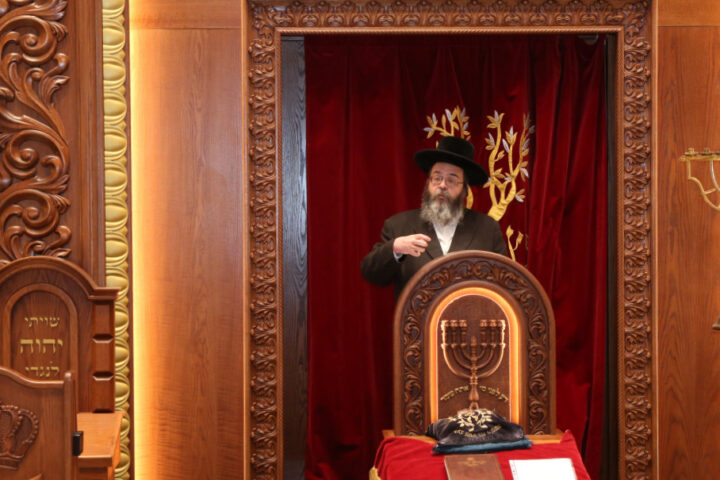
Rav Moshe Rosen— the Nezer Hakodesh emerged as one of the country’s most active rabbinical leaders
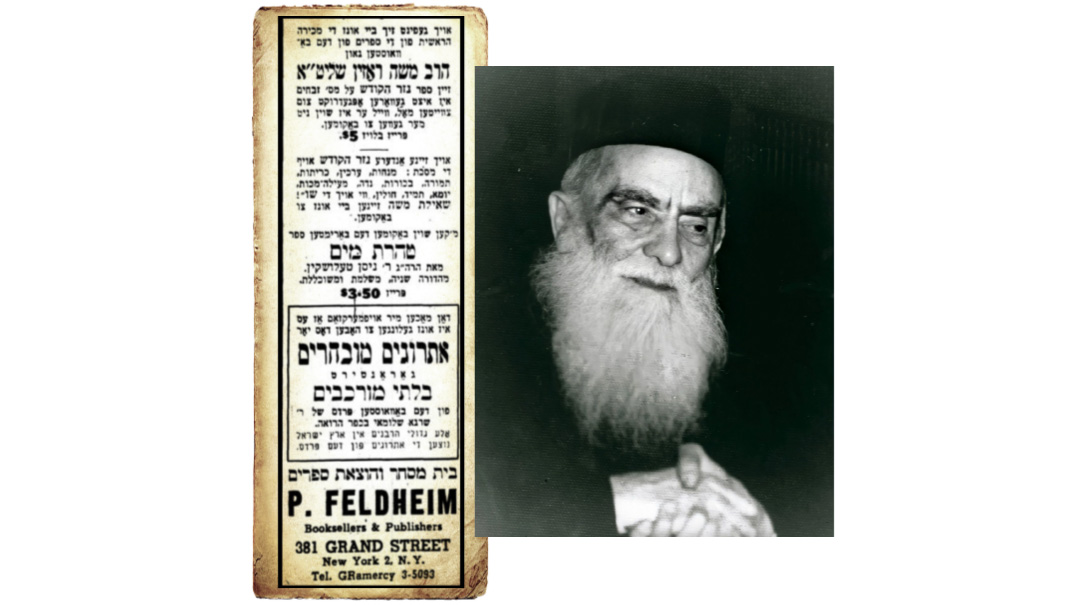
During Chol Hamoed Succos 1957, residents of Brooklyn’s changing Brownsville neighborhood were greeted by the sight of closed streets and a somber crowd of nearly 20,000 Jews from across New York City. Although it was the middle of Succos, they had gathered to pay homage to a venerated rabbinic leader. Rav Moshe Feinstein issued a psak that a full-fledged funeral should be conducted with hespedim delivered by him, Rav Aharon Kotler, Rav Yosef Eliyahu Henkin, Rav Avraham Kalmanowitz, Rav Pinchas Teitz, and Rav Nissan Telushkin. America had lost its holy crown, Rav Moshe Rosen — the Nezer Hakodesh.
Having grown up in Bransk in eastern Poland, he was known as Moisheleh the Masmid for his diligent Torah study. He received semichah at the age of 20 from Rav Yitzchok Elchonon Spektor and Rav Moshe Danishevsky of Slabodka. Following his marriage to Hinda, the daughter of Rav Hillel David Trivash, the rabbi of Vilki, Lithuania, he studied for some time in the Kovno Kollel in preparation for the rabbinate.
In the late 1890s, Rav Moshe Rosen was hired as rabbi of Chweidan in western Lithuania, near the German border. He’d hold the position for nearly three decades, and was one of the few rabbis who remained in the area during the German military occupation of World War I, and as such he assumed rabbinical responsibilities for several surrounding towns as well. Using his flawless German, he dealt with the German authorities regarding refugees, arrests, and related issues, risking his life several times to rescue Jews. The Germans even appointed him to oversee bread distribution to the general populace.
In the quiet years before the Great War, Rav Moshe Rosen discovered a young Rav Avraham Yeshaya Karelitz, later to achieve immortality as the Chazon Ish. Rav Rosen was mesader kiddushin at his Chweidan wedding. They began studying together on a regular basis. Recognizing the uniqueness of his young protégé, Rav Rosen was likely the one who informed Rav Chaim Ozer Grodzenski about him. They’d remain in close contact in the ensuing decades, with the Chazon Ish assisting with the publication of Nezer Hakodesh and Rav Rosen helping with the publication of Chazon Ish. In his later years, Rav Rosen provided financial assistance as well, and they maintained an active correspondence.
Create a free account to keep reading.