Dr. Dovid Friedman transplanted global top practices to his Lakewood health center
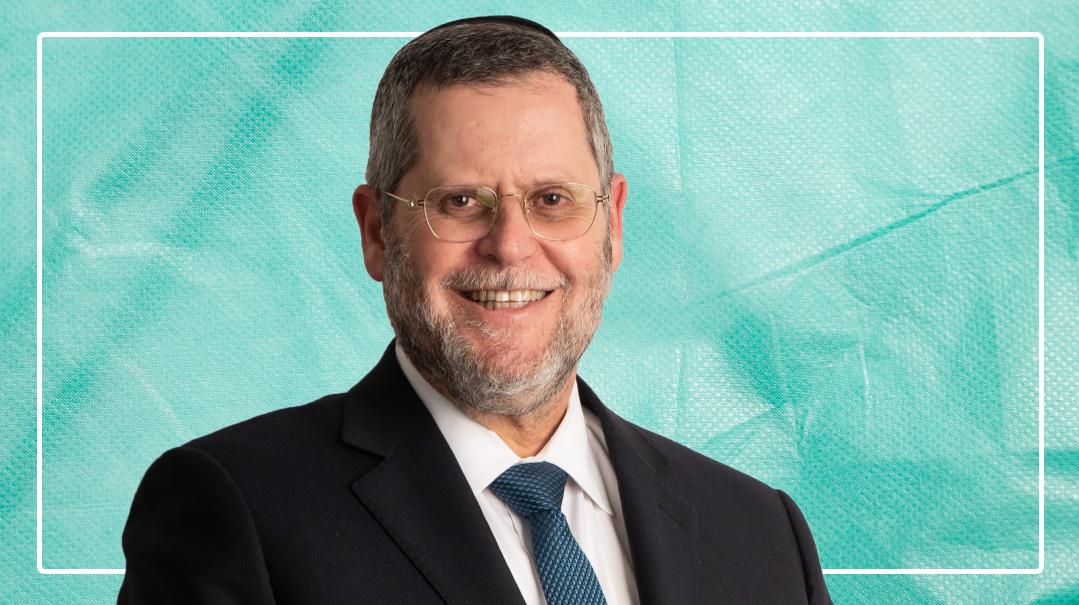
Dr. Friedman, a native of South Africa, began his medical career there when the country was still governed by an official policy of apartheid, and that provided the backdrop for his earliest lessons in what it really means to be endowed with the responsibility of healing others. Today the “Rainbow Nation,” as it’s known for its diverse population of more than 59 million citizens, includes scores of exotic African tribes, each of them speaking its own language and practicing its own culture. Yet for all its diverse citizenry and multicultural populace, up until just 30 years ago, its citizens were divided up neatly into three status categories: “White,” “Colored (a mix of ethnicities),” and “Black.”
Prior to 1994, when political prisoners were released, freedom of association legalized, and a non-racial constitutional democracy established, racial segregation under the all-white government of South Africa dictated that non-white South Africans, the majority of the population, were required to live in separate areas from whites, use separate public facilities, receive separate (inferior) services, and have as little contact as possible. The clear demarcation of South African neighborhoods, beaches, buses, and schools was compounded by stark inequality (a park might have seven benches for whites and one for blacks, and if a black person sat on a whites-only bench, he’d be arrested).
Like all areas of life in South Africa, its health care system was segregated. South Africa’s white citizens were treated by highly skilled professionals in state-of-the-art facilities, while its citizens of color were relegated to squalid conditions. When Dr. Friedman graduated medical school in 1989 from the University of Witwatersrand, he opted to do his residency — the essential postgraduate training for medical students — in a black facility. Being in a black setting for several hours a day and interacting with that population was an unusual choice for someone of his background, and despite growing up in and attending educational institutions in an apartheid country, he didn’t fully appreciate the extent of the discrimination until his work with his black countrymen.
“It left a profound impact on me. It’s one thing to know conceptually what apartheid is, yet it’s quite another to live it daily,” he says. Dr. Friedman was assigned to Chris Hani Baragwanath Hospital — a mammoth facility with about 3,200 beds, reputed to be the largest in Africa and the third largest in the world (the two largest are in China).
Create a free account to keep reading.