Last week’s decision in 303 Creative LLC v. Elenis struck a major blow for the right of religious Americans to follow their consciences
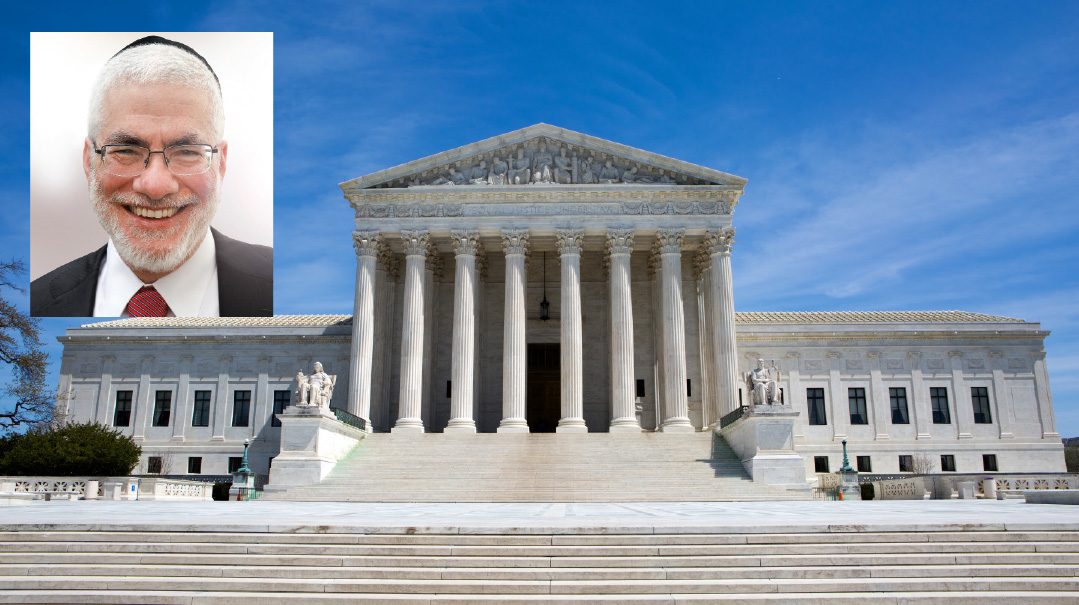
The current US Supreme Court is probably the most solicitous of rights of religious liberty and conscience of any Supreme Court in history. And that is very fortunate for Torah Jews, as fewer and fewer Americans profess any religious affiliation and religious values command declining respect among the general public.
Last week’s decision in 303 Creative LLC v. Elenis struck a major blow for the right of religious Americans to follow their consciences in refusing to promote certain messages through their work, despite state statutes forbidding discrimination on the basis of race, religion, or gender. The Court determined that Colorado could not force a web designer to create a website celebrating a civil marriage that violated her religious belief that marriage is a union between one man and one woman.
Some may have thought that the decision followed naturally from the Court’s 2018 ruling in favor of Masterpiece Cakeshop and against the Colorado Civil Rights Commission. In the earlier case, the Court ruled that the CCRC had wrongly punished baker Jack Phillips for his refusal to bake a cake celebrating a same-gender ceremony. But nothing could be further from the truth.
The Court decided the earlier case based on very narrow grounds, which depended heavily on a specific factual situation — to wit, the evident hostility of the CCRC, or at least one commissioner thereof, to Phillips’s religious beliefs. That hostility, and that hostility alone, removed the case from the rule of Employment Division v. Smith (1990) that neutral state statutes, enacted with no particular animus toward a particular religion or religion in general can be enforced even when they impinge on individuals’ free exercise of their religion.
Create a free account to keep reading.