Rav Mottel Katz’s impact extended beyond the walls of Telshe
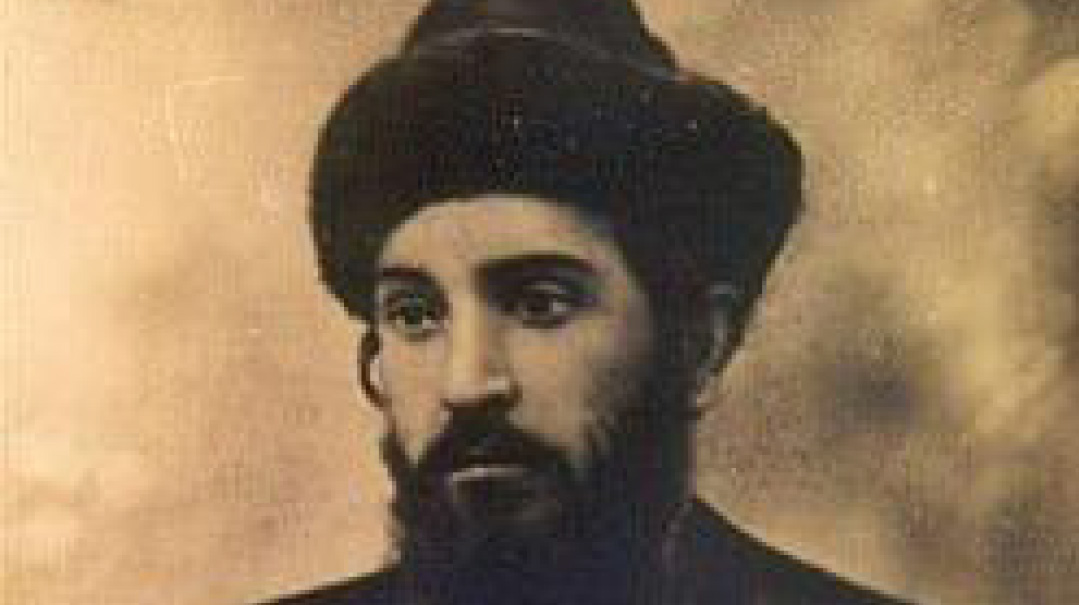
—Rav Mottel Katz (Shiurei Daas)
Internal disputes over the place of mussar in the yeshivah curriculum led to Rav Yosef Leib Bloch leaving the Telshe Yeshivah of his father-in-law, Rav Eliezer Gordon, in 1902. He was later appointed rabbi of nearby Shadova, where he opened his own yeshivah. One of his prime students there was Rav Chaim Mordechai (Mottel) Katz (1894–1964), born in Shadova to Rav Yaakov, a respected maggid shiur; his mother, Rochel Leah, came from distinguished lineage through her father, Rav Shmuel Yosef Havsha.
When Rav Yosef Leib returned to Telshe after his father-in-law passed away in 1910, he agreed not to bring his Shadova talmidim with him, so as not to dilute the Telshe Yeshivah’s unique atmosphere. So a young Mottel Katz traveled to Slabodka, where he joined Rav Boruch Ber Leibowitz’s Knesses Beis Yitzchak yeshivah. He later moved on to Telshe, remaining there until the outbreak of World War I, when he joined the Volozhin Yeshivah for two years, receiving semichah from its rosh yeshivah Rav Refael Shapiro. During this period, he was also privileged to forge a relationship with Rav Shlomo Polachek, the Meitscheter Illui, who particularly appreciated Rav Mottel’s grasp of the distinct derech halimud of each yeshivah.
Even as his parents and several siblings emigrated to South Africa, the young Mottel showed his dedication to Torah by staying behind.
Following World War I, he returned to Telshe in newly independent Lithuania, where he married Perel Leah, the daughter of his rosh yeshivah, Rav Yosef Leib Bloch. Rav Mottel then formally joined the faculty of the burgeoning institutional network that his father-in-law was building. His first position was as head of the Telshe Mechinah, a preparatory school for younger students, where he served as maggid shiur for the senior talmidim. He also served on the administration of the Yavneh School for girls, the first of its kind.
In 1924, he was appointed to the helm of the kollel in Telshe. Rav Mottel’s talents had begun to attract notice in the wider Jewish sphere, and he was tapped to serve as head of Zeirei Agudas Yisrael and participated in multiple Knessios Gedolos.
The year 1929 brought multiple personal tragedies: the passing of his revered father-in-law Rav Yosef Leib, of his father in South Africa, and the losses of his wife Perel Leah and his young son Shmuel. Despite these devastating blows, Rav Mottel maintained his countless responsibilities while increasing his involvement in communal affairs. He remarried in 1931; his second wife, Chaya Kravitz, was daughter of Rav Moshe Kravitz, the rav of Piyura, and Rav Yosef Leib’s brother-in-law. Together they merited seven more children.
Lithuania was forcibly incorporated into the Soviet Union in 1940, and the Communist regime began closing religious institutions. Rav Mottel and his brother-in-law Rav Eliyahu Meir Bloch were dispatched to the United States to try to arrange for the resettlement of the yeshivah there.
Reb Aharon Bentzion Shurin recalled a fall evening in 1940 when he was among a group of European-born Telshe alumni who greeted the roshei yeshivah at Penn Station:
Despite this unimaginable personal tragedy, Rav Mottel and Rav Eliyahu Meir demonstrated remarkable resilience by rebuilding Telshe Yeshivah in Cleveland. In October 1942, they opened the yeshivah with just a handful of students. Their efforts extended to founding the Hebrew Academy of Cleveland in 1943, and Yavneh for girls in 1946.
Under their joint leadership, the Telshe Yeshivah in Cleveland grew steadily, becoming a beacon of Torah learning in America. When Rav Eliyahu Meir passed away in 1955, Rav Mottel continued as sole rosh yeshivah. In 1957, he oversaw the yeshivah’s move from downtown Cleveland to a spacious campus in Wickliffe, Ohio. This move allowed for increased enrollment and improved facilities. In 1960, Rav Mottel established a branch of Telshe in Chicago.
Throughout his leadership, Rav Mottel maintained the high standards and unique derech halimud that had characterized Telshe in Europe. He was known for his ability to connect with American-born students while imparting the depth and breadth of the “Telsher Derech.”
In a tribute to Rav Mottel, Rav Reuven Feinstein, who studied in Telshe during his formative years, expounded upon the malchus (majesty) of Telshe:
Even in the face of adversity, such as a devastating fire in the yeshivah dormitories in 1963, Rav Mottel’s leadership remained steadfast. He immediately launched a rebuilding campaign, raising significant funds to ensure the yeshivah’s continued growth.
Rav Mottel’s impact extended beyond the walls of Telshe. He served as a member of the Moetzes Gedolei HaTorah of Agudath Israel, contributing his wisdom to broader Jewish communal issues. His leadership in Cleveland helped establish the city as a major Torah community.
Rav Eliyahu Meir Bloch and Rav Mottel Katz didn’t reestablish Telshe in New York or any other location on the East Coast. They endeavored to spread Torah in an area of the country where it was most needed, and decided to explore the frontier and establish their yeshivah in Cleveland. Later Rav Mottel would expand upon the Telshe “manifest destiny,” and open another branch in the Midwest with the Telshe Yeshivah of Chicago. As Rabbi Berel Wein recalls in his memoirs:
Despite the unimaginable loss of his family, Rav Mottel dedicated his entire being to rebuilding the yeshivah and creating a new life in America. Publicly, he maintained a composed and stoic demeanor, focusing on his mission to perpetuate Torah learning and the legacy of Telshe.
However, one day, a student passing by Rav Mottel’s office witnessed an uncharacteristic moment of vulnerability. The rosh yeshivah was overcome with grief, weeping uncontrollably. Concerned, the student entered the room to see what had caused such anguish.
Rav Mottel explained: “Every day, I sit here and picture the faces of my wife and each of my precious children who were taken from me. Today, for the first time, I could no longer remember how my youngest child looked.”
The 11th of Kislev will mark the 60th yahrtzeit of Rav Chaim Mordechai Katz.
(Originally featured in Mishpacha, Issue 1040)