A Shabbos of heartbreak and hope with escapees from Lev Tahor
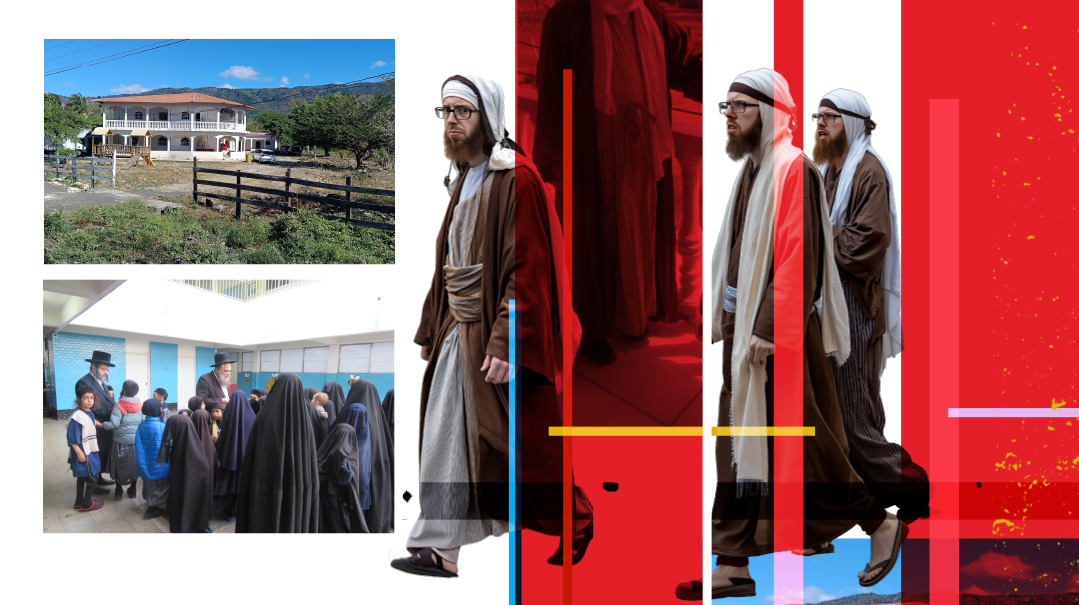
Today is Friday, and while I’d been parked in Guatemala City for several days observing the legal proceedings involving the rescued children as parents petition for custody and reunification if they leave the cult, together with the tireless work of askanim and rabbanim who’ve become regular guests at the local Chabad house, now we’re heading for the Knishta Chada, where we’ll be spending Shabbos.
But just before we set out, another car pulls up to our van and out comes a couple: The woman looks scared, like she doesn’t want to be seen (she’s wearing a burka so it’s hard to see her in any case). It’s Yoeli Goldman and his wife — she happens to be the granddaughter of Lev Tahor’s “reish mesivta,” Moshe Yosef Rosner, who oversees the sect’s day-to-day operations. Yoeli left Lev Tahor months ago, yet his young wife remained together with their two children, and when the authorities removed the children, she moved into the nearby protest tent. Just the day before, she somehow managed to make contact with her husband and they’ve now been reunited. After Shabbos, they will appear in court together, receive custody of their children, and arrange to leave the country within 30 days, as per the court’s stipulation. (Any parent who avows to make the break from Lev Tahor and leave the country can appear in court and retake custody of their children.)
The Knishta Chada (a term in the Zohar referring to a joyous assembly of upright Jews), where we’re headed this weekend, is an ad hoc kehillah headed by Yoel Henich Helbrans, son of Lev Tahor founder Shlomo Helbrans and brother of current leader Nachman Helbrans. Nachman is currently serving a 12-year prison sentence in America for kidnapping the children of their sister after she took her family and fled, fearing, among other threats, her brother’s call for mass suicide if the authorities would come to disband the group.
From infancy, Lev Tahor members are systematically conditioned to believe that if they were to leave the “chaburah,” the world outside is an open abyss, just waiting to ambush them. But across the street from their now-defunct compound, the “rebel” breakaway and holding community of Knishta Chada is made up of individuals and families who’ve left the sect yet prefer an “easy landing,” from where communal activists have been working to help them reintegrate into mainstream chareidi/chassidic life.
Create a free account to keep reading.