The Boyaner dynasty, and its historic chazakah over the hadlakah, almost didn’t survive
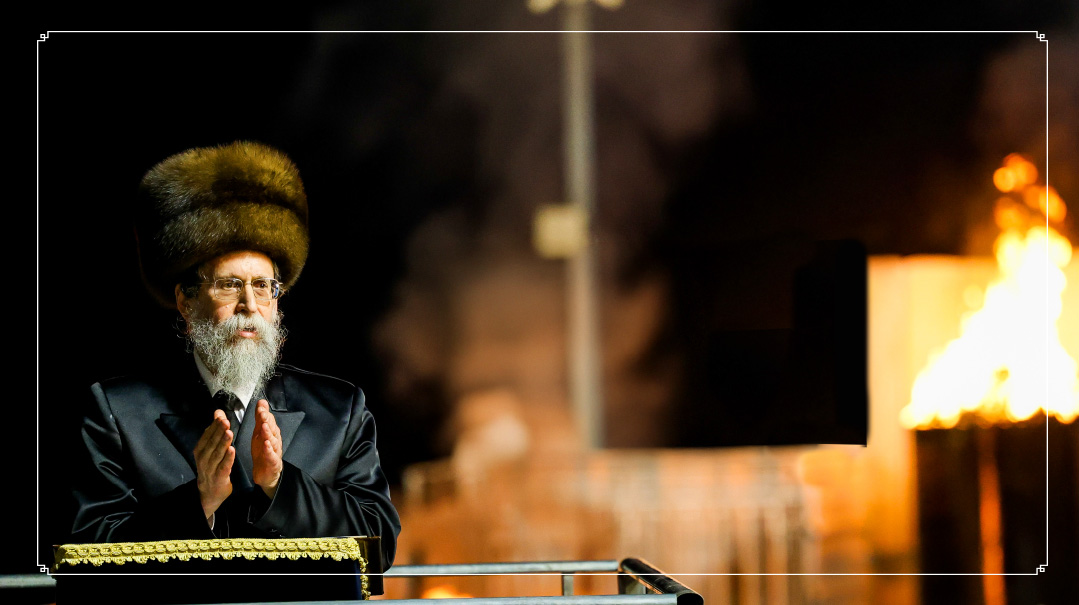
As the music shifts from haunting niggunim to jubilant song, the Boyaner Rebbe lifts the torch in hand, and as the flame catches the bundle of oil-soaked cotton, all of Meron seems to erupt in sacred joy. Yet the Boyaner dynasty, and its historic chazakah over the hadlakah, almost didn’t survive — until a remarkable chain of events restored the crown and returned the tradition to the famed rooftop bonfire
It was Zos Chanukah, 1984.
I was a young boy when my father a”h told my brothers and me that we would be attending a tish that evening. The announcement surprised us, because although my father had deep chassidic roots through his father and grandfather, our family had not taken part in such gatherings since immigrating to Israel. In the United States, we had regularly davened in the beis medrash of Rebbe Moshe Mordechai Heschel of Kopyczynitz in Boro Park — he even served as sandek at my bris. But after his sudden passing in 1975 at the young age of 47, my father stopped attending tishen.
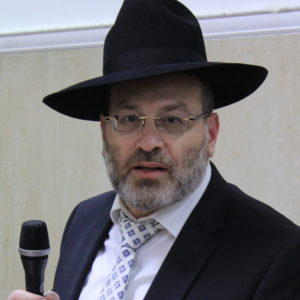
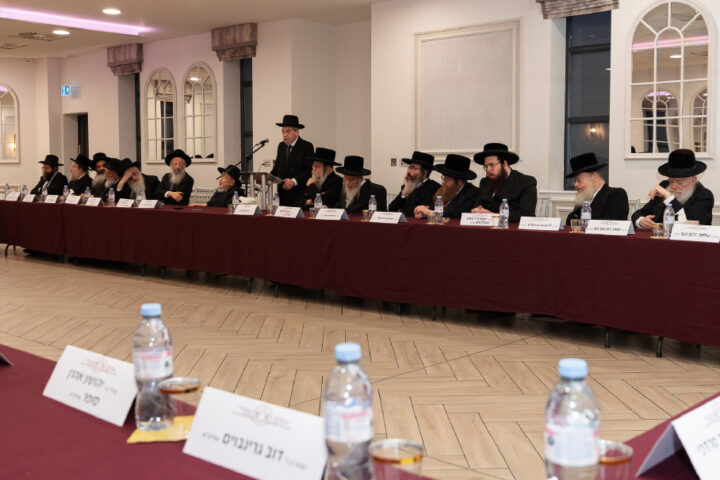
When we arrived at Yeshivas Tiferes Yisrael (the Boyaner yeshivah) on Malchei Yisrael Street in Jerusalem’s Geula neighborhood, the excitement in the packed hall was palpable. For my father, the moment was deeply personal: The young, newly-coronated Boyaner Rebbe — 25-year-old Rav Nachum Dov Breyer, a grandson of the previous Rebbe who passed away in 1971, was married to the granddaughter of Rebbe Avraham Yehoshua Heschel of Kopyczynitz (a close friend and distant cousin of the previous Boyaner Rebbe and father of Rebbe Moshe Mordechai). And now, after much rabbinic pressure, this young, quiet talmid chacham had finally agreed to take on the leadership of the Boyaner chassidus. For the chassidim, it was a long-awaited moment of renewal, a turning point they had yearned for for over a decade.
Create a free account to keep reading.