It’s 200 years and a different world since Rebbe Nachman of Breslov passed away. In the heart and prayers of Rebbetzin Sara Gelbach, the Rebbe’s great-great-great granddaughter, the fire — kindled
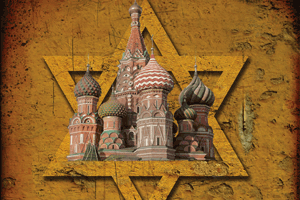
Uman — a primitive village on the banks of the Umanka River — boasted a Jewish community since the 18th century. The 1917 Bolshevik Revolution paved the way for authoritarian rule under which Jewish life in Uman was almost wiped out.
Rebbetzin Gelbach’s father Avraham Berjegovski was a Gerrer chassid who hailed from Poland. When he was twelve he traveled to Breslov where his brother-in-law Mattityahu Berjevski was living. There he became a Breslover chassid and later married Rochel Libovna a granddaughter of the Breslover Rebbe.
All the chassidim lived on a street dubbed by locals as Breslover Street. Rebbetzin Gelbach reels off familiar names such as Hirsch Leib Lipin Levi Yitzchak Bender and Eliyahu Chaim Rosen.
When the Communists began their persecutions the shul and mikveh were closed. In 1918 Rebbetzin Gelbach’s father a merchant and the shamash in the shul built a mikveh in one of the rooms of their large house. “Even nonreligious people used it ” Rebbetzin Gelbach recalls. “It had a heating element in the middle to warm the water. There was no shortage of rain water to fill the mikveh but the water had to be changed every day. Since we had no plumbing system I had the job of carrying out the water. I had to make several trips carrying two pails on a stick across my shoulders and a third one in my hand. I was ten years old at the time.”
Create a free account to keep reading.