Sometimes it takes a trip to the heavens to appreciate G-d’s handiwork on Earth. That’s what the Apollo 11 crew — the first men to step on the Moon — realized 50 years ago
F
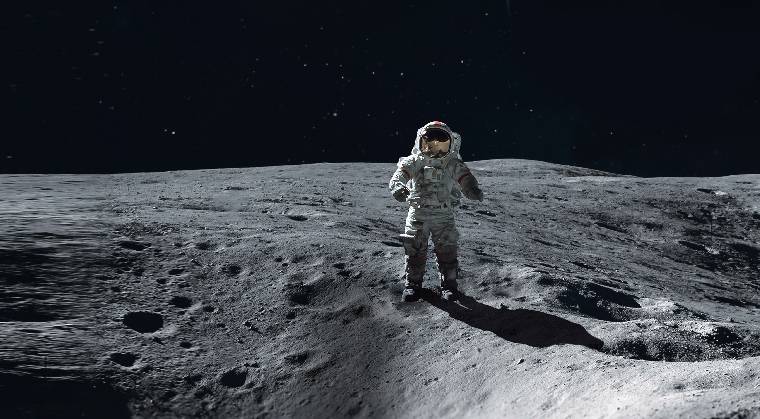
ifty years ago, on July 21, 1969, Buzz Aldrin became one of the first two men to land on the moon as part of the Apollo 11 space mission. Participating in such a historic event gave him pause, and he wanted to find a suitable way to mark the occasion. Aldrin, a religious man, was aware “that G-d reveals Himself in the common elements of everyday life.” He wanted to pay homage to the fact that “G-d was revealing Himself on the moon, too, as man reached out into the universe” by invoking G-d’s name in an explicitly religious observance. But as governments, the media, and entire nations were swept up in the dramatic scenes of silver- clad men blasting through the atmosphere, the religious subtext became a source of controversy.
NASA (the National Aeronautics and Space Administration) was still smarting from a recently concluded legal battle with an atheist who challenged public displays of religiosity. The higher-ups wanted to avoid ruffling anybody’s feathers, and instructed Aldrin to keep his ceremony low-key.
So instead of making a public reminder of the thanks due to G-d, Aldrin radioed to NASA: “I would like to request a few moments of silence… and to invite each person listening in, wherever and whomever they may be, to pause for a moment and contemplate the events of the past few hours, and to give thanks in his or her own way.”
Many astronauts, both before and after Aldrin, have been moved to publicly acknowledge G-d’s power and give thanks for His gifts to mankind. Less than seven months before Aldrin’s moonwalk, the Apollo 8 mission had orbited the moon for the first time in history. The crew members were the first humans to see the dark side of the moon, and the first to see the Earth as a whole planet. They captured the beauty of the sight in their famous photo of Earthrise — planet Earth floating alone in the eternal night of space, warmly welcoming and achingly vulnerable. The magnificent sight led them to transmit a unique broadcast from their spaceship, which garnered the largest television audience ever at that time. One billion people, a quarter of the Earth’s population, tuned in to hear the astronauts take turns reading aloud an English translation of the first ten verses of sefer Bereishis, describing Creation.
Create a free account to keep reading.