Nori makes an interesting and savory addition to a variety of dishes.
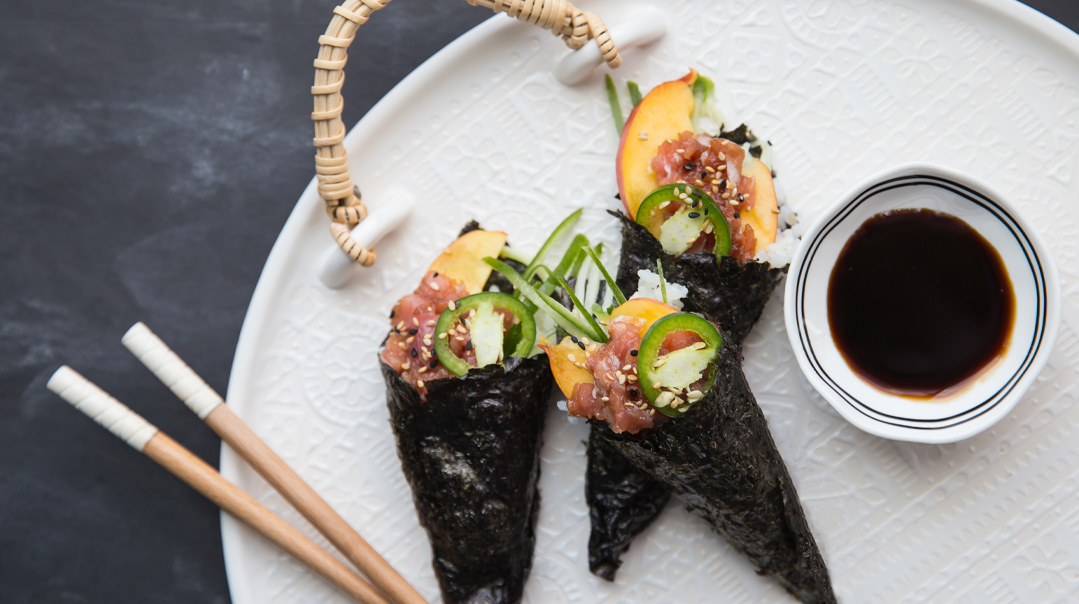
Some 10,000 types of seaweed exist throughout the world, but only about 300 to 400 are edible. Of the varieties used in foods, there are five types of seaweed that are most commonly eaten today: nori, arame, hijiki, kombu, and wakame. Nori (海苔) is the Japanese name for edible seaweed species of the red alga genus Pyropia.
It is the most popular sea vegetable and is typically used to wrap rolls of sushi or onigiri. Dried sheets of nori are made by a shredding and rack-drying process that resembles papermaking. You can find nori sold in packages in the ethnic aisle of most major grocery stores. Since nori sheets easily absorb water from the air and degrade, a desiccant is needed when storing nori for any significant amount of time. Packaged in an airtight container or ziplock bags, nori will keep for at least a year in the pantry. Nori is typically toasted prior to consumption (yaki-nori). You can also find seasoned nori snacks (ajitsukenori), where nori is toasted and seasoned, typically with soy sauce, sugar, sake, mirin, and other seasonings.
USES: Sprinkle shredded nori over ramen, sushi rice, omelets, baked fish, salads, or steamed vegetables.
QUICK & EASY: To make your own furikake (umami rich nori seasoning), cut up toasted nori into tiny pieces, and mix with toasted sesame seeds, salt, and a pinch of sugar to taste.
Create a free account to keep reading.