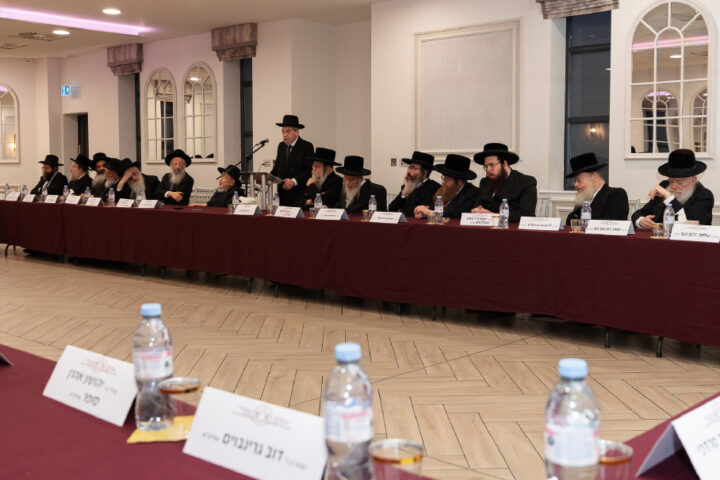
Five top international badchanim, who share their experiences and perspectives from the very heart of the Jewish wedding

Based in Antwerp, Belgium
Badchan for 20-plus years
Challenge number one is getting the information. I prepare a lot in advance, because I like the grammen to be very much personalized to each family. I have to call this shvigger and that one, across different time zones. And not everyone is good at describing people. I can ask someone to tell me about his father, and he says “he was an erliche Yid” — and I have to go prepare a whole piece out of that.
Then there’s the timing and the travelling. A standard mitzvah tantz in Eretz Yisrael finishes at 1:30 or 2 a.m., but in Europe it’s more like 3:30 a.m. I’ve sometimes finished a job at 6:30 a.m. and gone straight to Shacharis. My busiest week was probably one last summer when I worked five nights, traveling between Eretz Yisrael, Belgium and London. Obviously, chasunah work is very seasonal, so you have to take the bookings when you can. There are fewer chasunahs during the final week of each month, and Nissan and Tishrei are usually quiet, as well as the Omer and the Three Weeks.
There was the mother of a kallah in the US who wanted me to sing grammen while her husband danced with the kallah. Not before he danced, as is usual, but while. She asked me to sing a non-Jewish song, which I wouldn’t do, but baruch Hashem we were able to find something similar, and the whole arrangement worked very nicely.
Today it’s common to call up the uncles together, but occasionally I’ve been asked by a mechutan who is in a rush, to call up both grandfathers to dance together as well.
Create a free account to keep reading.