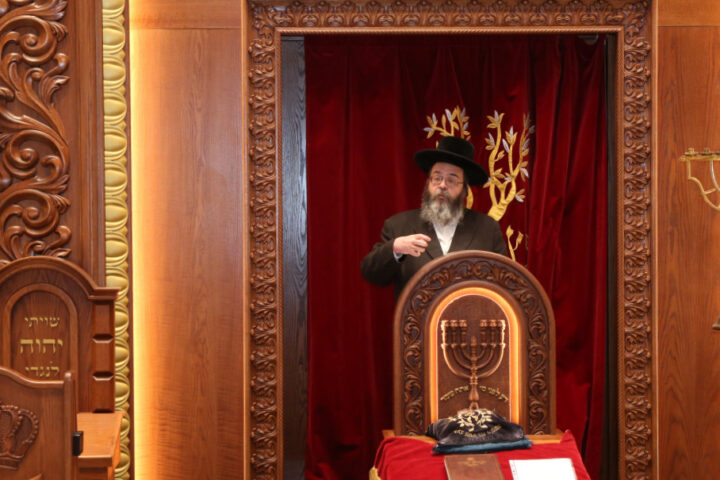
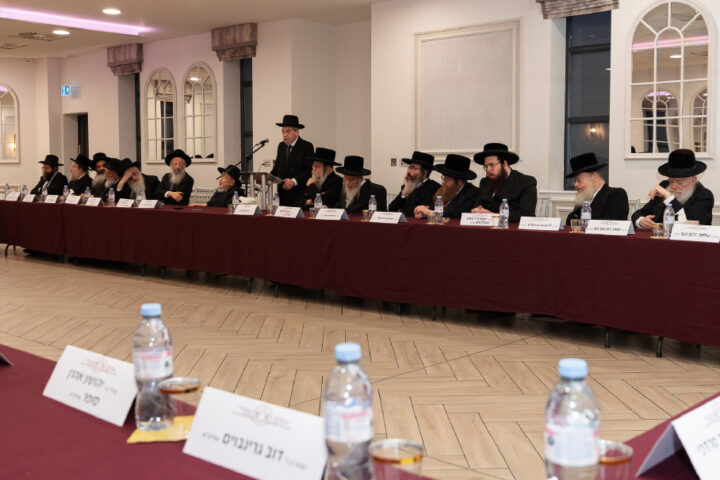
The shul and its builder had come full circle, attaining historic status while hosting the exiled yeshivah
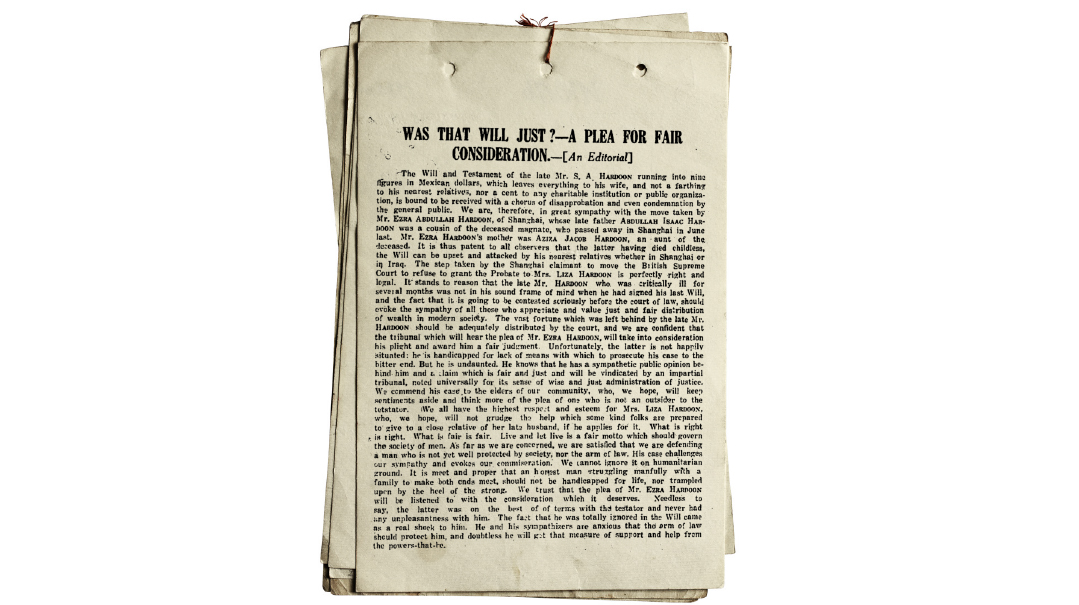
In the burgeoning free city of prewar Shanghai, there were few characters as perplexing as Silas Aaron Hardoon, an outsized figure whose real life story often blended with legend and mystique. Born in Iraq in 1851, he came to Shanghai as a young adult via India and began working for the illustrious Sassoon family. Before long he went out on his own and attained success in real estate. As Shanghai developed, he came to own much of what would become its downtown district, and by the mid 1920s he was the wealthiest man in all of Asia.
Hardoon assimilated and lived a life apart from the Jewish community in a grand estate replete with gardens modeled on Beijing’s iconic Summer Palace. Appeals to him for local Jewish charities were met with small or no response. Under the influence of his wife Liza, who was a devout Buddhist (and was rumored to have had a Jewish father), he became the patron of local Chinese educational and social causes. Childless, they adopted a dozen foreign children, some of whom had been abandoned by impoverished Jewish families when they fled the 1917 Bolshevik Revolution.
In the early 1920s, the Hardoons approached leaders of the Shanghai Jewish community with an offer to replace the Shearith Israel shul with a state-of-the-art synagogue. The new k’nis was to be named Beth Aharon in memory of Silas Hardoon’s father.
The community was shocked. Rumors spread that Hardoon’s father had appeared to him in a dream, rebuking him for having done nothing Jewish to honor his memory, and this was his way of paying tribute. A plot was chosen in the center of town on Museum Road, and the edifice was dedicated in 1927, with the Hardoons covering the land and building costs and handing the keys over to the community for stewardship.\
Create a free account to keep reading.