They are not traveling away from, disgruntled and searching for the ever-elusive greener grass of the other side. They are traveling to

would like to begin by commending you on the honesty, courage, and capacity for painful self-reflection embodied in your message. Candid assessment of our communal realities and the willingness to improve is the first step toward fostering a Yiddishkeit that is meaningful, engaging, and eminently relevant to the Jews of our generation.
I read your letter with mixed emotions.
On the one hand, I was excited that a “rabbi of a fairly large, fairly relevant congregation” would privately recognize and take to Mishpacha magazine to publicly declare that while his congregation “wanted connection and chizuk,” they received only “sound bites about politics and lectures,” and while they wanted to be “talked up to,” they were only “talked down.”
On the other hand, I feel that your evaluation of the “Uman-goers” may have missed the mark. Were Uman to simply represent the universal alternative to stultified davening experiences, where Jews fed up with the politicized derashos and monotonous tefillos of their respective shuls flocked to join forces and pray with great inspiration and connection, your words would ring true. (It is worth noting that this image does indeed find microcosmic expression in the many break-off shuls, “shtiblach,” and Carlebach minyanim that abound in every major Jewish community worldwide — perhaps the starkest expression of your sentiment noted and applauded above.) But when it comes to Uman Rosh Hashanah, there is another angle that, while certainly including it, far transcends the desire for inspiration and connection. That angle is the mysterious and powerful draw of Rebbe Nachman of Breslov zy”a.
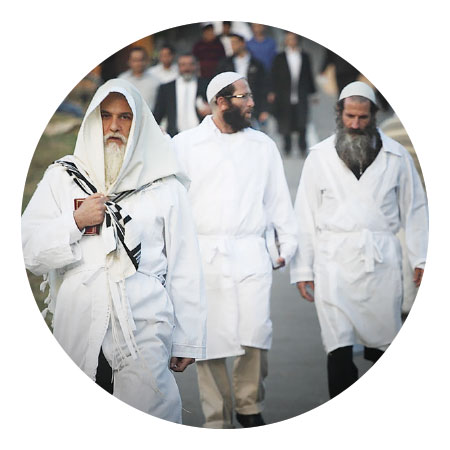
A registered “Uman-goer” myself, I can attest to the fact that the overwhelming majority of even those who, in your words, are “Breslov only in regard to the Uman experience,” are caught in the magnetic field of this tzaddik. (see Likutei Moharan 70). They may have only heard one lesson — perhaps the almost universally known lesson of Azamra (“finding the nekudah tovah”) — or a single story. Perhaps all they ever heard in the name of this spiritual giant were the words, “There is no despair in the world at all!” or, “The whole world is a very, very narrow bridge and the main thing is not to fear at all!” Simple sentiments, droplets of chizuk. But for some reason, these iconic teachings from the tzaddik penetrate the heart with unparalleled impact, fostering a personal connection to the one who spoke them, a connection that — even in its rawest form, and certainly when developed through further study — soon creates an enormous debt of gratitude and appreciation. We shouldn’t underestimate the “Breslov-ness” of those who sacrifice spending Yom Tov with their families (yes, it is difficult for the men as well!) and spend money they don’t have to experience an often-uncomfortable Yom Tov with Rebbe Nachman. Because that’s the important part— they are not traveling away from, disgruntled and searching for the ever-elusive greener grass of the other side. They are traveling to. To fulfill the will of the tzaddik. To express their gratitude for the way he has changed their lives, directly or indirectly. To celebrate the messages the living persona of Rebbe Nachman exudes. And to storm the gates of Heaven together with 50,000 Jews who feel the same way on behalf of all the Jews back home who do not.
Create a free account to keep reading.