Jews were banned from Jerusalem for centuries after the Beis Hamikdash was destroyed, leaving the far-away Galil the new frontier. And Tzippori became the place to reframe
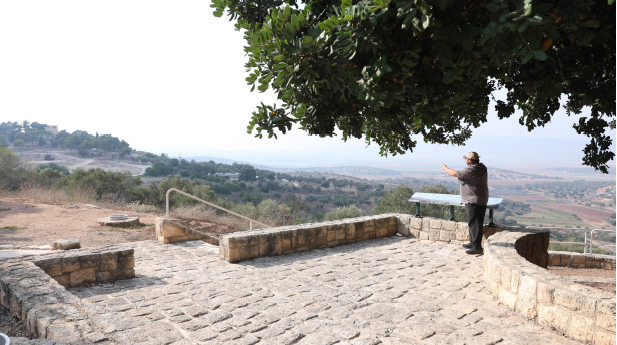
Think Jewish history in Eretz Yisrael, and Jerusalem is obviously central. But Jews were banned from Jerusalem for centuries after the Beis Hamikdash was destroyed, leaving the far-away Galil the new frontier. And Tzippori became the place to reframe
I love Israel’s north. It’s not just the magnificent green mountains, valleys, streams, and fields, but the richness of the history of this area. Most tourists who come to Eretz Yisrael base themselves around Jerusalem — after all, it’s the holiest city, the capital of our country, the makom Hamikdash, the place we invoke in our prayers three times a day. Yet from a historical perspective, vibrant Jewish communal life in Jerusalem was essentially nonexistent from the time of the Bar Kochba revolt, which came on the heels of the destruction of the Second Beis Hamikdash, until around the 1700s. Rome banned the Jews from coming back to settle in Jerusalem, and over the centuries, although Jerusalem was never completely abandoned, there were never more than a few dozen families who lived there for any significant period of time. Even though there were thousand years of Jerusalem history prior to that, post-Churban Jewish Jerusalem isn’t more than a few hundred years old — and anything we find in Israel that isn’t at least 400 years old doesn’t even make it to the Antiquities Authority.
But the Galil, in the north of Eretz Yisrael, was a different story. Even after the Jews were banned from Jerusalem, the northern communities continued to flourish, while so much of the early history of our People — especially during the Mishnaic and Talmudic eras — took place in this incredible region. And Tzippori, the city we’re heading to today on our virtual tour — the place where Rabi Yehudah Hanasi settled for the last 17 years of his life as he compiled the Mishnah — was one of the most important.
If you’ve been touring the Galil, coming from the Haifa area or perhaps Meron, in order to get to Tzippori you’ll probably pass through the Somech intersection, located in the valley between two hills where stood two great cities in the period of the Mishnah: Usha and Shefar’am. These are two of the five cities mentioned where the Sanhedrin rested after moving up north from Yavneh after the Churban. It was in this valley that Rabi Yehudah ben Bava clandestinely came to give semichah to five students during the period when the Romans passed a decree prohibiting the teaching of Torah under penalty that the cities caught violating the decree would be destroyed. Rabi Yehuda ben Bava therefore went outside of the cities so that the towns wouldn’t suffer retribution. The scholars were caught, however, and Rabi Yehudah ben Bava was killed right here, in the Somech intersection, by 300 spears that pierced his holy body.
Create a free account to keep reading.