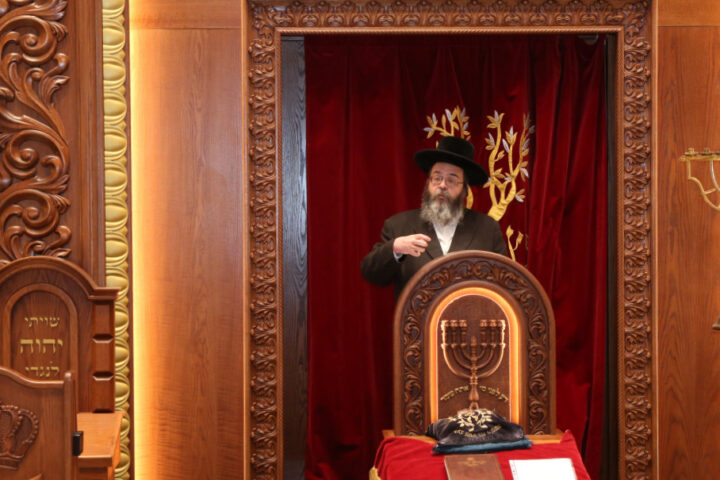
Dovid Hamelech didn’t want to decree that one must give; he wanted others to realize it was a privilege


Rashi says the “inspiration for generosity” is an expression of goodwill. Moshe asked Bnei Yisrael for donations for the Mishkan with goodwill — each person was allowed to give whatever he wanted, according to the generosity of his heart. Yet we know that every Jew was also required to contribute half a shekel toward the funds of the Mishkan. Why didn’t Moshe Rabbeinu just ask everyone to give a certain amount that would cover the entire cost of the Mishkan? (Rav Avigdor Nebenzahl)
His name was Itzik, but it wasn’t. He never had a bris and the prognosis for one didn’t look good. At two years old, he lay in his crib in Schneider’s hospital, attached to tubes, his still body housing a neshamah… a beautiful, untainted neshamah. His family dubbed him Itzik, hoping and praying that one day he’d be well enough to have a proper bris and receive a proper name.
Born with both lung and kidney disease, for the first year and a half of Itzik’s life, he was stable enough able to live at home. Receiving both supplementary oxygen and overnight dialysis, he slowly reached milestones, learning how to crawl, then walk. Then, at 18 months, he suffered a stroke that rendered him incapacitated.
Itzik’s parents were torn between being spending time with their sick child, who was mostly unresponsive, and caring for their other children. That’s where Adina, a volunteer for Tikva Umarpeh came in. Tikva Umarpeh is an incredible organization that supports families and patients dealing with child nephrology and dialysis. When they asked Adina if she would be able to spend some time with Itzik, her response was immediate. She wanted to give.
For the rest of the summer, Adina spent several days a week, for eight hours straight, sitting at Itzik’s side and caring for his needs.
Create a free account to keep reading.