What Baghdadi's death means for ISIS
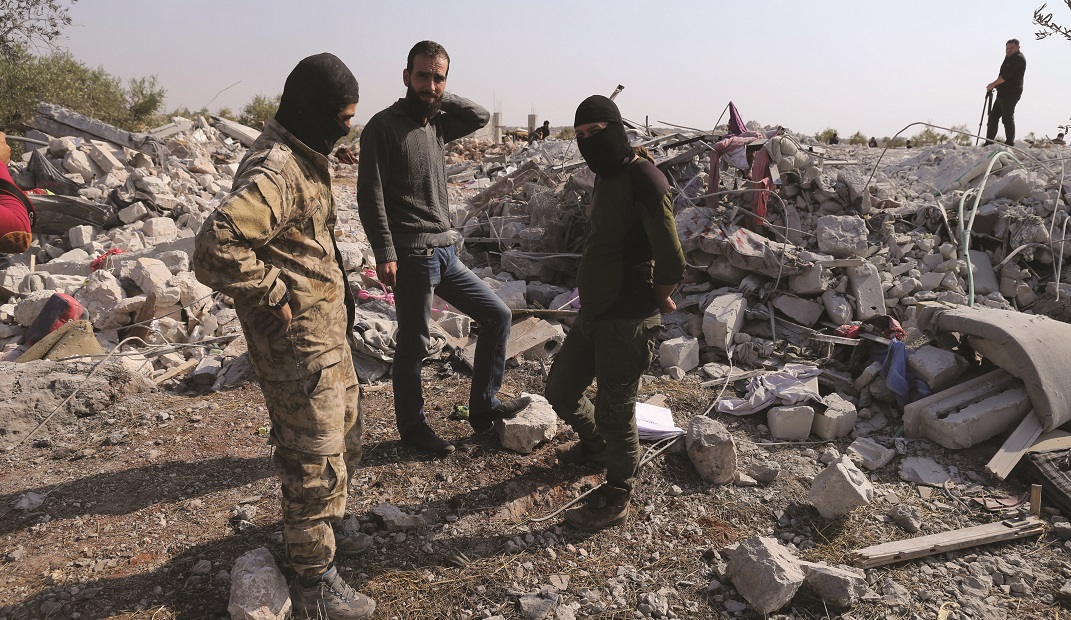
Photo: AP Images
The assassination of Islamic State leader Abu Bakr al-Baghdadi is unlikely to significantly affect the organization’s activities in the Middle East and certainly won’t dampen its thirst for jihad, Israeli security officials told me.
The operation to eliminate al-Baghdadi was complex and bold, comparable to the operation in which US Navy SEALs eliminated Osama bin Laden in Pakistan in May 2011. More than 100 special operations soldiers were ferried in eight helicopters in the middle of the night over hostile areas controlled by terrorist organizations and within range of Russian and Turkish aircraft to land in a remote area of northern Syria.
There, the Americans stunned the Islamic State fighters with their firepower, pursuing al-Baghdadi into a tunnel, where he blew himself up. Not one American soldier was killed in the raid, though two sustained minor injuries. American soldiers were on the ground in Syria for two hours and managed to collect intelligence that will help them combat future operations by Islamic State, also widely known as ISIS.
Al-Baghdadi had succeeded in transforming ISIS, which began as the Iraqi branch of al-Qaeda, into the world’s most powerful terrorist organization. At one point, ISIS controlled 34,000 square miles in Syria and Iraq for more than three years. ISIS ran its caliphate as a state within a state, complete with police forces, laws, and an independent economy based on tax collection and oil trade. The terror group also trafficked in kidnapping and the selling of antiquities. Al-Baghdadi was not only the leader of the organization and the head of state, but also presented himself as a religious authority, relying on his claim that he belonged to the Quraysh tribe of Muhammad, Islam’s founder.
Create a free account to keep reading.