In the past week, something has changed
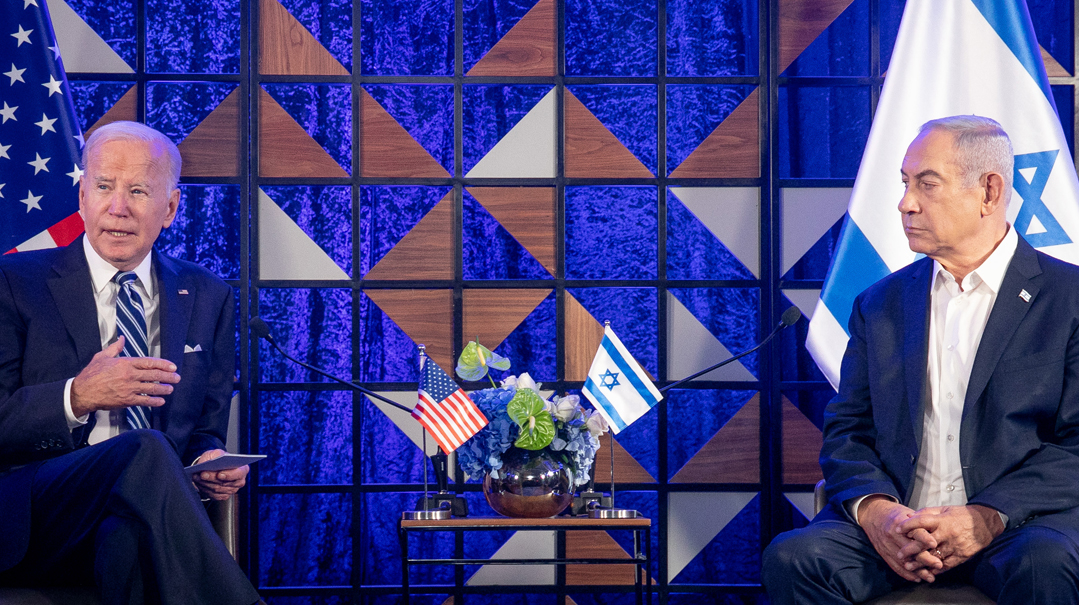
IT was the first post-October 7 visit by a senior White House official that recalled the Biden administration’s attitude toward the Israeli government before the war. Like previous officials, National Security Advisor Jake Sullivan landed in Israel for a meeting with the war cabinet in the Kiryah bunker. But this time, Sullivan was here to issue an ultimatum and receive a clear answer regarding Israel’s deadline for the operation.
In the early days of the war, President Biden’s speeches were balm to the soul of the wounded Israeli public, proving that American support is Israel’s mainstay. It’s not just in the international arena, where the United States stands alone with Israel, as reflected in the recent UN Security Council vote. Militarily as well, the American president has provided Israel with unprecedented assistance, even eclipsing America’s aid to Israel during the Yom Kippur War.
America’s deployment of aircraft carriers, submarines, and special units to the region stymied Hamas leader Yahya Sinwar’s master plan of dragging Israel into a multifront war on five different fronts. American supplies of tens of thousands of shells and munitions, including tank shells and bunker-busting bombs, enabled the IDF to unleash devastating firepower. So far, America has demanded little in return — limited mostly to allowing increased humanitarian aid and fuel into the Gaza Strip, expanding the humanitarian corridor for civilians, and other issues.
Israel almost unfailingly fell in line with the administration’s demands, with a clear rationale: As long as the administration backs the core principle of allowing the operation to continue, Israel can afford to compromise on pinpoint issues.
Create a free account to keep reading.