Yossi Rosensteins traveling exhibit transforms all the emotions and yearning associated with Kever Rochel into a visual showcase
In Parashas Vayishlach, we read about the death and burial of Rochel Imeinu “on the way to Efrasa… And that is where Yaakov buried her and placed a headstone over the burial site” (Bereishis 35:19–20). Rashi there explains, “that is the headstone of Rochel’s burial site to this day,” as a marker for Jews going into exile and — may it happen speedily — “coming back to their borders.”
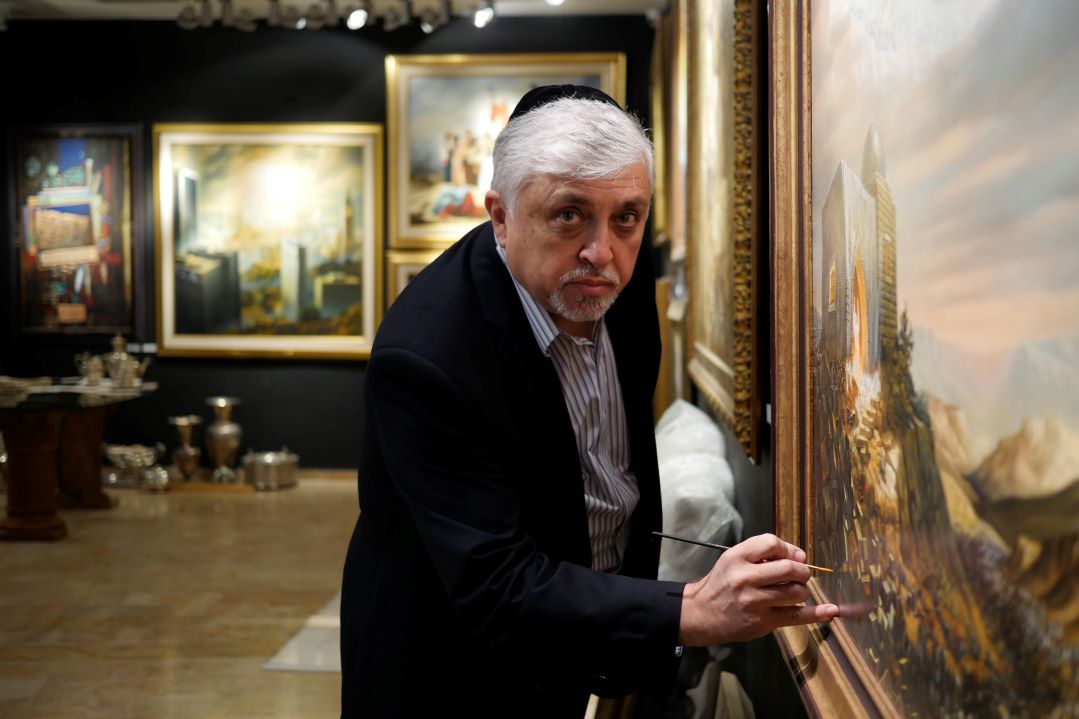
For artist Yossi Rosenstein, those words became a calling. His current traveling exhibit transforms all the emotions and yearning associated with Kever Rochel into a visual showcase.
Rosenstein was a promising young graduate of Ponevezh and Chevron yeshivahs when he considered entering what he thought would be the glitzy world of business — he had already been accepted as a member of the diamond bourse in London. But an inside voice told him that trajectory would kill the yearnings of his soul. Being honest, he realized he wanted to live a life of spirituality, not just to visit it once in a while. So he decided to abandon the promise of glitter and instead invest his energy into his G-d-given talent: creating a synthesis between what he calls the heichal haTorah and his special gift for art and creativity.
Jerusalem-born Rosenstein, 64, a ninth-generation Israeli descended from a prominent Slonimer chassidic family who today lives in Bnei Brak, taught himself to draw and paint when he was a bochur, and had his first exhibit when he was just 21 — in a Tel Aviv gallery whose proprietor was so captivated by his unusual style that he agreed to keep its doors closed on Shabbos.
Create a free account to keep reading.