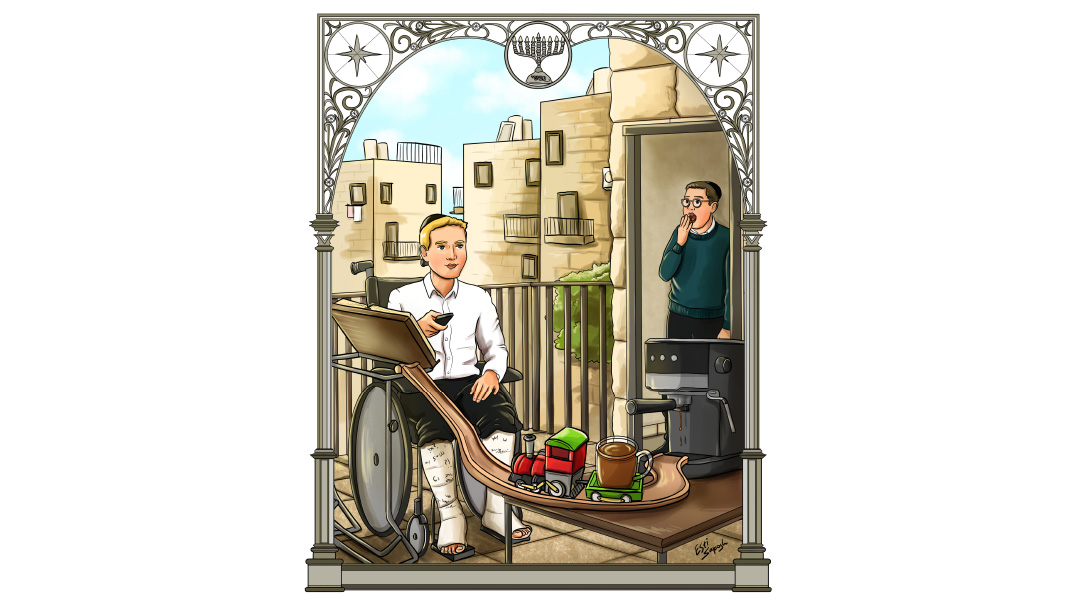
Rebbeim return to the classroom with new tools honed by lockdown
As told to Sandy Eller
“I’ll never take the sound of learning for granted again”
When we first shut down in March, we started with teleconferenced classes, but there’s a limit to how long anyone can expect to capture the interest of eight-year-old boys on the phone, without the usual back and forth that keeps students engaged. The one saving grace in the early days of the outbreak was that we were learning Hilchos Pesach and were up to birchos Yaakov in Chumash — both are subjects that worked in a monologue format.
But when it became clear that we were in this for the long haul, the yeshivah made the leap to video conferencing, distributing tablets to every student. As both a father and a rebbi, I had certain reservations about putting students on tablets, but playing around with them gave me confidence that they could be used for their intended purpose and nothing more. Virtual learning provided more of a classroom experience and we were able to bring Maseches Brachos to life by showing PowerPoint presentations and videos of how sandwich cookies are made and why Pringles require a different brachah than other potato chips.
Teaching on Zoom is vastly different than being in a classroom with students. Usually, the kid tapping his pencil is disturbing only the boys around him, but with virtual learning, it can affect the entire class — and that look that a rebbi gives a kid to get him to stay in line just doesn’t work on Zoom. Something as innocuous as a kid walking around his bedroom creates a problem for the entire class, and while you could in theory send a message to just that one student asking him to stop, it is extremely difficult to do that mid-lesson without breaking your stride. Classroom management was definitely the biggest struggle. One colleague told me that while teaching is supposed to be energizing, this was just draining.
Create a free account to keep reading.