What are your signs and signals that Elul has arrived?
IN our community, and I’m speaking for Egyptian, Lebanese, and Syrian Jews here, we know it’s Elul long before it’s Elul. On Tishah B’Av afternoon, at Minchah, the custom is that the first line of Kedushah, Naaritzach v’nakdishach, is sung to the tune of Selichot. Following Minchah, we sing one of the well-known Selichot piyutim. That is the earliest sign of us getting into the Elul mode.
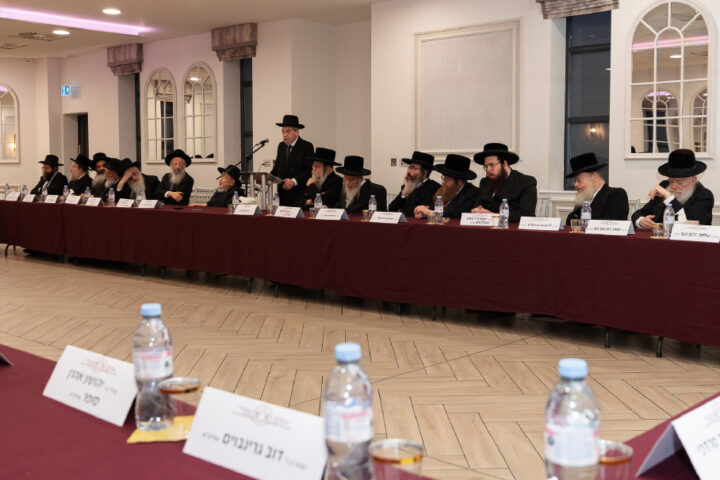
Immediately after Maariv on the Motzaei Shabbat 40 days before Rosh Hashanah, the shul fills up for a very public hatarah. This is equivalent to the Ashkenazi custom of doing hatarat nedarim on Erev Rosh Hashanah, but our custom of doing it 40 days before is linked to what is written in the Zohar Hakadosh, that certain aveiros need to be absolved 40 days before your prayers can be accepted.
The cars fill up the street outside as soon as Shabbat is over, and men, women, and children, pile into the shul for hatarah. We use the Rosh Hashanah tunes for Maariv that night, then we make Havdalah, followed by the hatarah. Our shul is almost as packed as Kol Nidrei night! With the beit din seated on the platform at the front, the entire crowd — hundreds of people — says the nusach together, “Bechulhon, icharatnah behon,” and the beit din responds accordingly: “Mutarim lachem, sheruyim lachem, mechulim lachem.” Then there are three responses from the kehillah, and the beit din responds again each time.
The day after Rosh Chodesh Elul we begin daily Selichot, and then the season is really in full swing. Also early in Elul, the Syrian stores start stocking gourd, leek and Swiss chard, black-eyed peas, and sheeps’ heads. My wife’s grandmother used to prepare these simanim for the entire family, and now my wife does it for us — and gives out containers to her siblings, too. As was the tradition in Aleppo, the peel of the gourd gets grated and candied. My wife goes through the Yehi Ratzon booklet, cooks the simanim early in Elul, and freezes them for Yom Tov. It’s true that you can now buy all this ready-made in a Syrian grocery, but still, the women are discussing the simanim, whether to buy the black-eyed peas frozen or canned, and whether they are infested this year or not. There’s already an excitement for Yom Tov with the smells wafting from the kitchen creating the atmosphere, letting us know that Rosh Hashanah is coming.
Create a free account to keep reading.