Gantz leads in polls, but he still needs Bibi
All elements of the emergency government could agree on one thing this week: The sense of security has returned. Not for residents of the north and south, who have been living as refugees in their own country for over 130 days, but for Prime Minister Binyamin Netanyahu.
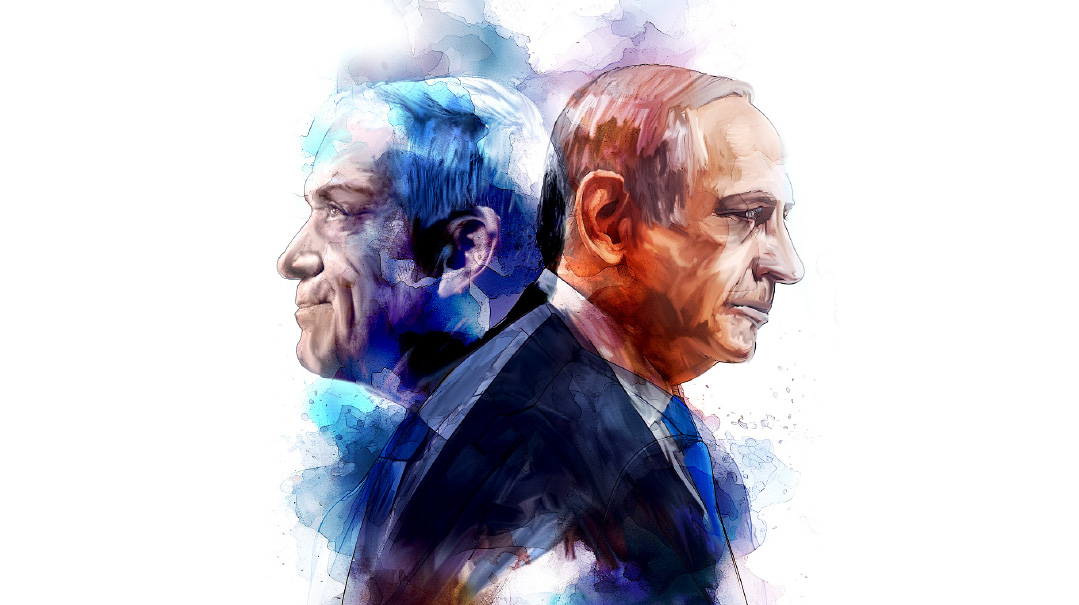
The term “old Bibi,” which entered the Israeli lexicon in the early 2000s, captured the difference between Netanyahu before his 1999 loss to Ehud Barak and after. While the old Bibi’s persona reflected the polarization that followed the Rabin assassination, the “new Bibi” rebranded himself as a moderate, responsible statesman who spoke to the entire nation and never uttered a word that could be construed as incitement.
Netanyahu’s new persona lasted about halfway into his 2009–2013 unity government with Labor under Ehud Barak. Ever since his fallout with Barak, Netanyahu has reverted to his original political strategy of allying with the chareidim and the settlers whenever possible. He may have flirted with the left once or twice since then, but in the current term, we saw only one version of Bibi, until October 7. In December 2022, Netanyahu formed the most right-wing coalition in Israel’s history, and led a judicial reform that was effectively “old Bibi” on steroids.
Over the course of 120 days of war, the prime minister returned to the “new Netanyahu” model. He invited Gadi Eisenkot and Benny Gantz to an emergency government, as well as opposition leader Yair Lapid, who turned him down. He left Itamar Ben Gvir and Bezalel Smotrich out of the war cabinet, signaling that he was aiming for broad national consensus. In the face of repeated sniping from Blue and White, Netanyahu responded with uncharacteristic restraint and did everything possible to hold the emergency government together.
Create a free account to keep reading.