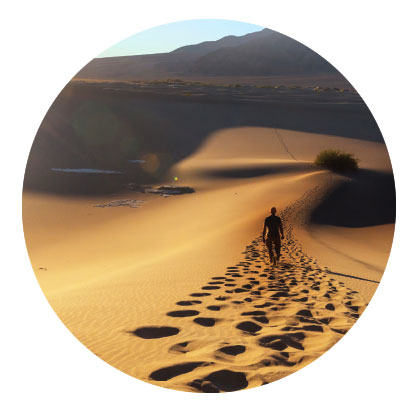
T hey were the quintessential refugees victims of a brutal devastating war with no end in sight. Constantly on the run they fled from hostile foreign soldiers and from rampaging looting brutes who had once been ordinary citizens. In a world gone mad the small family — husband wife and infant — rarely slept two consecutive nights in the same place.
Only one of them slept well.
For the parents life was unstable and volatile. Their world no longer had any constants. But the child? If one were to ask him at any given moment Where are you now? his answer would be consistent: In my mother’s arms. The child’s entire world — his reality and his frame of reference — was his mother’s embrace.
This is Rav Chaim Shmuelevitz’s classic mashal to explain how Bnei Yisrael were able to travel in the Midbar for so many years without a previewed or predictable itinerary. How is it possible to be constantly on the move or waiting for a signal to move with no foreknowledge of the path of travel? Does man not have an innate need for security consistency and stability? The Torah praises Bnei Yisrael for their faithfulness and fortitude for embarking on each part of the journey with trust and courage and for waiting patiently for further instruction. Paradoxically throughout the journey it was as if they had settled in one place for 40 years — for their camp had lain in HaKadosh Baruch Hu’s all-encompassing embrace.
This embrace took the form of the Ananei Hakavod the clouds of glory that enveloped the encampment. The Ananei Hakavod and the hug they represent are so significant that they are commemorated yearly by the succah that becomes our home for seven days. They are also immortalized in the words of Shir Hashirim (2:6) “His left Hand is under my head and His right Hand embraces me.” Rashi elucidates: Hashem supports me from below and embraces me from above a metaphor for the Ananei Hakavod that encompassed the camp from above and below.