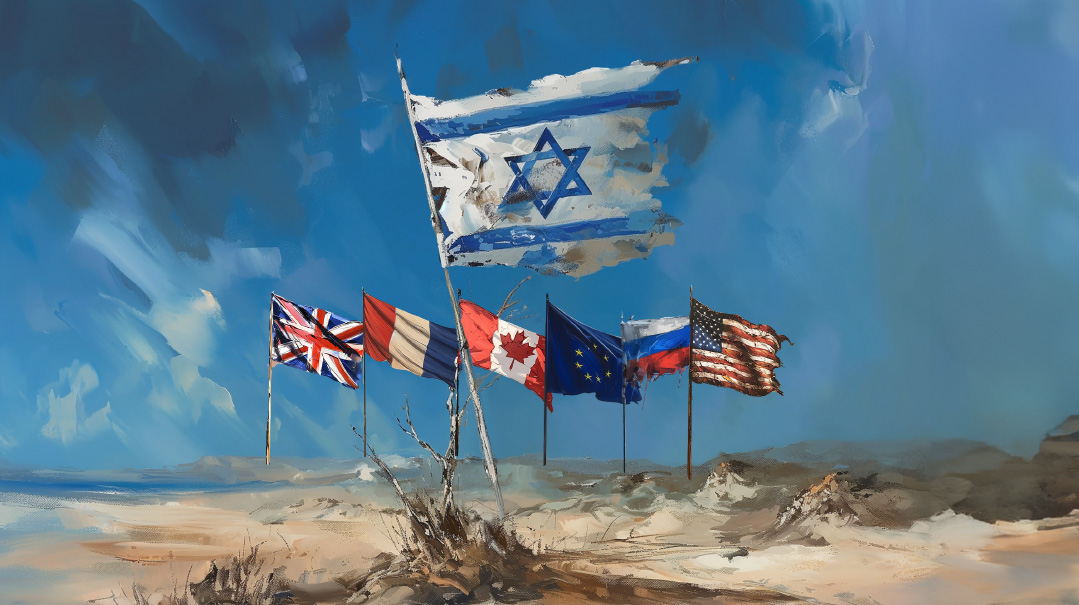
Six months after the horrors of October 7, Israel’s diplomatic outlook is increasingly bleak. Wall-to-wall support from Western allies has been replaced by threats of arms embargoes, the loss of diplomatic support at the UN, and near-breakdown in relations with the White House.
The hostility from the pro-Palestinian world that erupted while the Gaza area kibbutzim were still a killing ground was both wearily familiar and unprecedented in its ferocity. That anti-Israel onslaught has swung the needle. It’s hard to think of a time when the country has been this beleaguered, and that’s even before the IDF moves on Rafah, now home to a million Palestinians.
As the country faces its seventh month of fighting — with the outbreak of war in the north a very real possibility — diplomatic isolation raises a number of questions.
Is Israel truly as isolated as the headlines suggest? How did it find itself in such peril? Does history teach us anything about the way forward? Lastly, what should the country’s leaders and allies be doing to defuse the crisis?
Our website uses cookies to enable proper operation, improve the user experience, analyze website performance, and display personalized advertising. For more information, please review our Privacy Policy.