Madagascar, best known for lemurs, chameleons, rain forests, and the baobab tree, is also, according to island legend, one of the points of settlement of the Ten Lost Tribes. We had to see it for ourselves
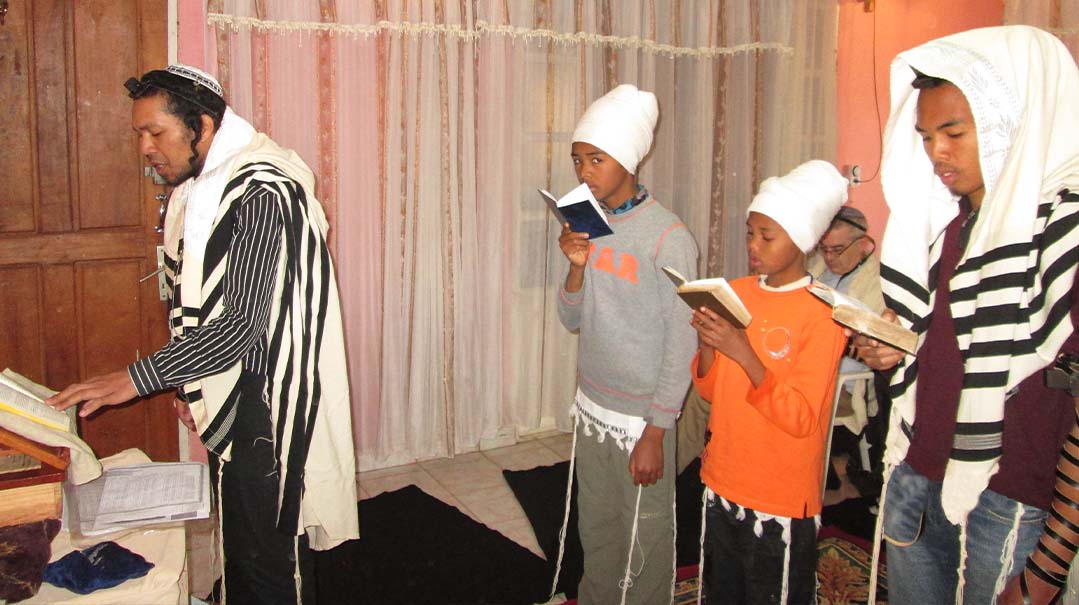
W e have seen some surprising things in our years of halachic adventuring but never had we expected to meet up with a group of Jewish converts on an island in the middle of the Indian Ocean. Yet when we arrived in Madagascar a large island 700 miles from the African coast of Mozambique (you might know it from the Risk game board) we discovered that not only had the group we met undergone a conversion process over this past summer but that many of the island’s inhabitants claim to have their roots in the Ten Lost Tribes. Naturally we wanted to see for ourselves.
This large and distant island, best known for lemurs, chameleons, rain forests, and the famous baobab tree, is the fourth largest island in the world, almost three times the size of Great Britain. Although it has a population of over 22 million, it is a poor and poorly managed country — but due to its remoteness, it’s the only place in the world that lemurs — a cute primate and a distant relative of the monkey — roam freely. There are close to 100 species of lemurs roaming around the country in their natural habitat, but we only had time to see them in a zoo in the capital. Still, we got the full experience, as the little creatures slobbered all over us after the zoo keepers smeared our palms with honey.
Lemurs are certainly fascinating, but we came to investigate Jews. Over the years we have written in these pages about numerous groups we’ve visited who want to or have converted, in some form or another, to Judaism. There’s the formerly Christian community of Erode, India who now pray in the Zion Torah center, and the Abuyadaya, a group of Ugandans whose chief accepted Judaism on himself and his tribe 100 years ago and who have since undergone Conservative conversion. In Columbia, South America, there are several shuls of truly frum converts, and there are synagogues in Nigeria belonging to the Ibo tribe who claim Jewish descent. In Zimbabwe, the Lemba are practicing Jewish traditions, as are communities in the Ivory Coast and the Cameroons. This phenomenon raises fascinating questions about motivations for conversion and the definition of what a Jewish kehillah really is.
Many of these communities have the Christian missionaries to thank for the ultimate move towards Judaism, and Madagascar is no different. One of the lasting legacies of the European occupation is that more than 50 percent of Malagasies (natives of Madagascar) self-define as Christian. But a number of individuals in the capital city of Antananarivo, after intense study and thought, decided that the true path to G-d was only through Torah and Judaism; others were convinced they had Jewish roots, evidenced by such long-time island practices as near universal circumcision and a widespread avoidance of pork. Back in 1658, ?tienne de Flacourt, a French governor of Madagascar, asserted that the locals were descendant from Jews, partly based on the practice of circumcision. Others believe that Portuguese anusim settled on the island, and we heard rumors about ancient tombstones with Hebrew writing, although we did not personally see any of them.
Create a free account to keep reading.