
hat are you doing this year for Purim? What are you dressing up as? Where are you having the seudah? There’s always a lot of hype surrounding Purim, and my relationship with the holiday has been characterized by the various ways I’ve negotiated with the expectations surrounding the day. Like a midyear reunion with an old camp friend, there’s always a sense of pressure to recreate your best moments together. Sometimes it’s wonderful, sometimes it feels like your ability to create new memories is stifled by the persistent burden to measure up your present experience to past encounters. Much like the Kübler-Ross five stages of grief model, my approach to Purim’s expectations has also evolved through different stages over the years. It sometimes doesn’t measure up, but we’ll always remain the dearest of friends.
My relationship with Purim began with fear. Every year, my elementary school would have a Purim party where kids would come dressed up in costumes. I’ve never shared this before, but I was absolutely terrified by most of the costumes. The bus ride to school the morning of the Purim party was fraught with terror — I was petrified of being accosted by a friend dressed up in a scary old-lady mask or, even worse, that I’d have to sit next to a zombie for the entire bus ride from my Lawrence home to Hewlett, New York.
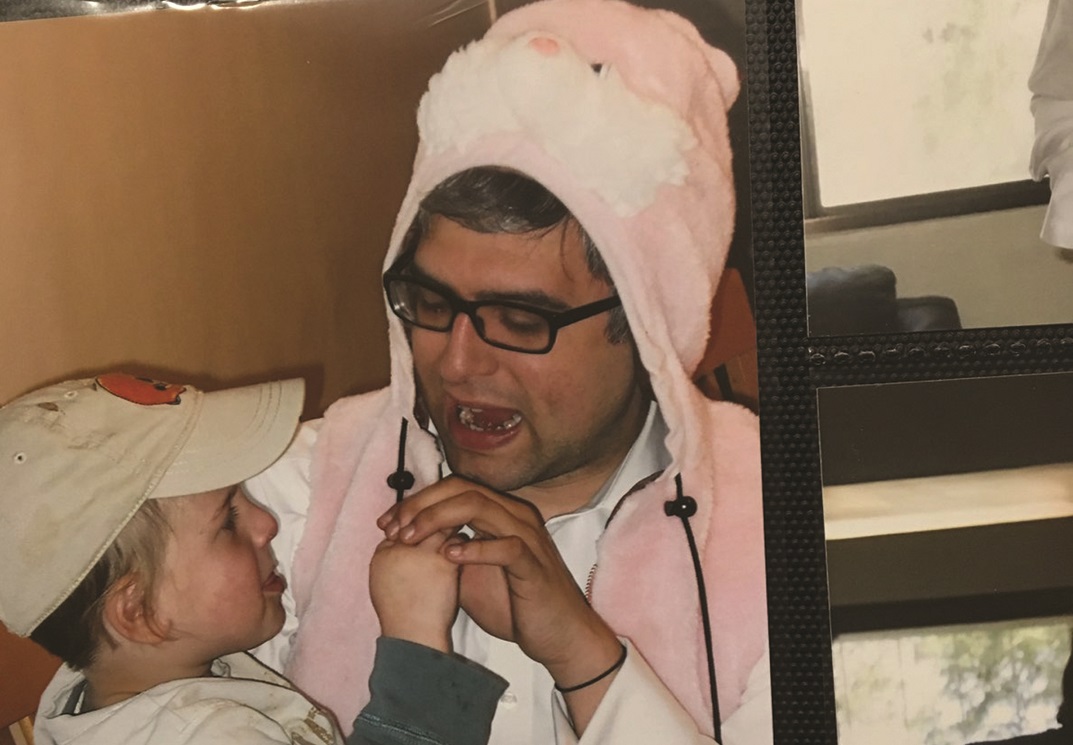
My early Purim relationship was complicated further by my father. Let me be clear — my father is my role model and hero in every aspect of life. Except one: Purim. My father is basically the Mr. Scrooge of Purim festivities. He would close the shades and hide upstairs to avoid the gaggle of bochurim dressed in giant ape costumes who would force him into uproarious circles and then, after being handed an $18 check, would brazenly ask, “Did you miss a zero?” Forced festiveness did not come naturally to this oncologist. Purim? Bah-humbug.
But my childhood Purim was not completely forgone. Revach v’hatzalah emerged from a different place—Sruly Greenwald’s The Purim Story tape series. If you’ve never heard the classic Purim Story tape series, stop what you’re doing, and listen now. It is for Jews of all ages. And, portending some of my own work for this magazine, many very subtle references were snuck in to appeal to all ages and backgrounds. The signature song from the tape includes the refrain, “We can do teshuvah, once again.” And that became my approach to Purim. Like teshuvah, Purim is not a one-time event. Reinvention can be done continuously.
Create a free account to keep reading.