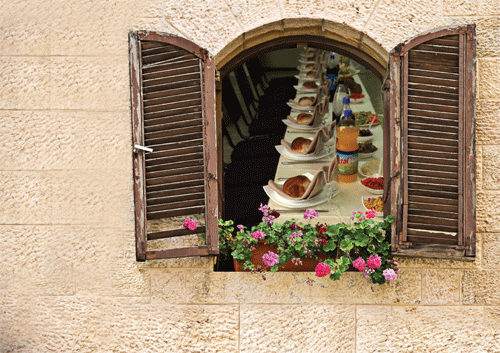
What often remain are the vivid memories of warm family meals imbued with the holiness of Shabbos and hosts who’d “cornered the market” on hachnassas orchim
Ask any seminary girl’s mother for her take on the Shabbos set-up. You’ll likely be treated to a fiery monologue enumerating her dear daughter’s weekly challenges of “finding a place for Shabbos,” punctuated dramatically by the oft-heard, shrill question: “And for this we’re paying twenty grand?”
But fast-forward to several years later and the picture sometimes changes. As the kallah meidel looks back on that seminal year, she’ll often realize that it was those varied Shabbosos that touched her most. Out of ten packed months that whizzed by in a blur, what often remain are the vivid memories of warm family meals imbued with the holiness of Shabbos and hosts who’d “cornered the market” on hachnassas orchim.
For a soon-to-be wife and mother who will be a hostess and queen at a Shabbos table of her own, seminary out-Shabbosim offer girls the opportunity to glean myriad examples of practices, perspectives, and ideals they’d want to incorporate in their future homes.
“When I came back to seminary each Motzaei Shabbos,” remembers Orly Cohen, now a busy wife and mother of a boisterous brood, “I made a list of exceptional hachnassas orchim routines I’d observed that I wanted to eventually integrate. Ranging from the simplistic to the more meaningful, this extensive list included items like walking guests to the bus stop and waiting with them until the bus arrived or learning halachah as a family at the Shabbos table, whether hilchos Shabbos or shmiras halashon.
Create a free account to keep reading.