A long-ago art form sheds light on Maimonides and the medieval Jewish world where he flourished
Photos: Elchanan Kotler
T
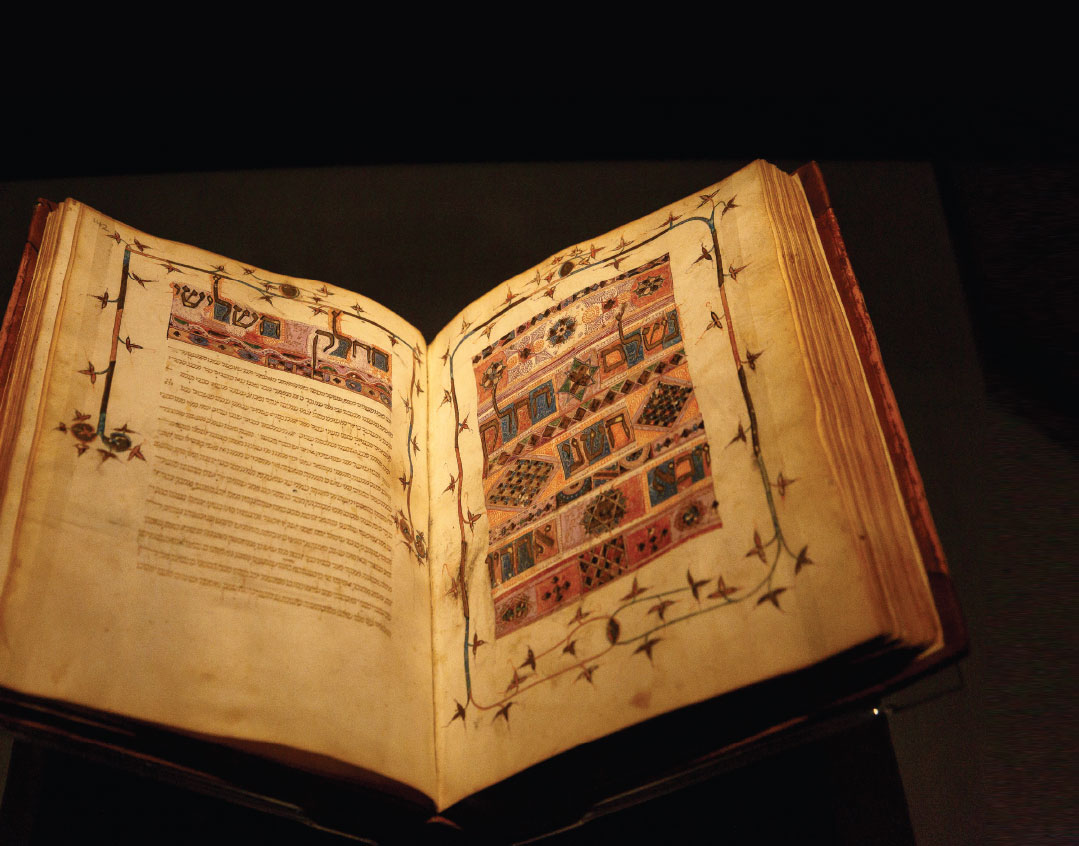
he gallery walls are black, and the lighting is dim. But inside the display cases, it’s all light: glistening golds, vibrant reds, and shimmering blues. And while the stars of the show are the magnificent examples of medieval illuminated art, they don’t overshadow the real gems, the words of Torah that flow across the pages — the life’s work of one of the Jewish People’s most outstanding leaders: Rabbi Moshe ben Maimon, more commonly known as the Rambam.
“Maimonides: A Legacy in Script,” an exhibition presented by the Israel Museum in partnership with the National Library of Israel, is drawing record crowds, according to chief curator Daisy Raccah-Djivre. To be precise, attendance in the museum’s Jewish Art and Life Wing is up by 60 percent. Considering that it’s not a special anniversary year for the Rambam, who was born in Cordoba, Spain, in 1135 (or 1138, according to some) and passed away in Fustat, Egypt, in 1204, why all the excitement?
Curator Anna Nizza Caplan, who along with associate curator Miki Joelson gave journalists a private tour of the exhibition, sums it up succinctly: “You’re going to see things at this exhibition that you will probably never see together again in Jerusalem or any other place.”
“From Moshe to Moshe, there arose none like Moshe,” reads the famous epitaph on the Rambam’s headstone in Teveria. While the Rambam couldn’t trace his lineage back to Moshe Rabbeinu, he was descended from Jewish royalty: His family members were direct descendants of Yehudah HaNasi, the compiler of the Mishnah.
Create a free account to keep reading.