How do police, entrusted with crowd control, make their split-second decisions in the face of a violent rioting mob? Las Vegas Metropolitan Police Department (LVMPD) Patrol Lieutenant Steve Riback shares some of the behind-the scenes training protocol and other tools to keep the fear away and his colleagues safe
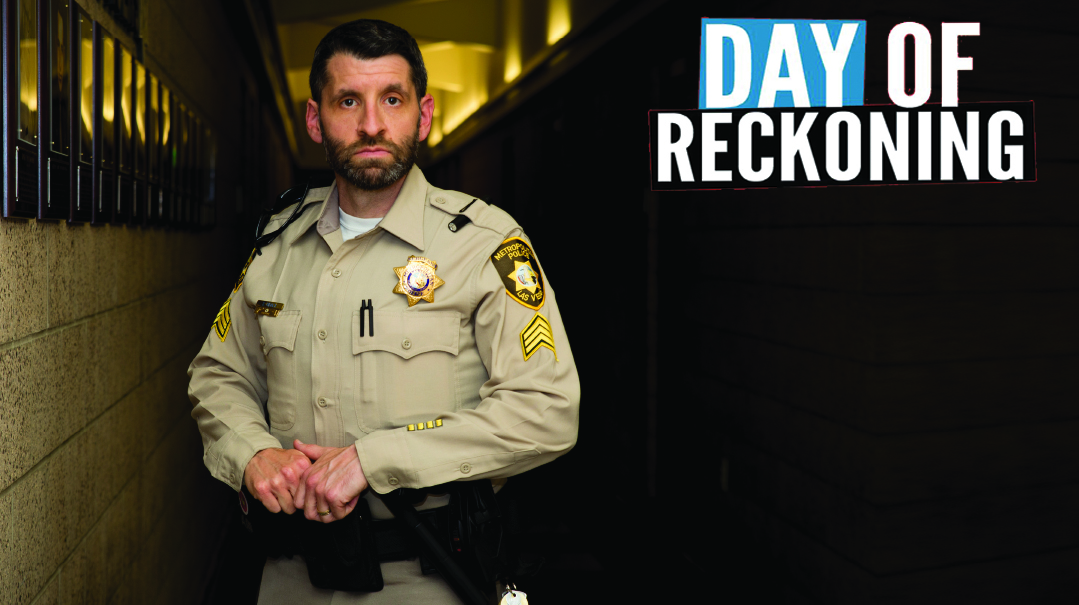
How do police, entrusted with crowd control, make their split-second decisions in the face of a violent rioting mob? Las Vegas Metropolitan Police Department (LVMPD) Patrol Lieutenant Steve Riback, a 23-year veteran of the force, currently in charge of the “graveyard shift” at the Summerlin Area Command, knows first-hand. This Orthodox Jewish officer, known as “The Kosher Cop” and author of the book My Journey Home, had his own tragic experience with violent rioters this past June, while trying to ensure that the Black Lives Matter protest over the death of George Floyd within the Las Vegas tourist corridor remain peaceful. It was then that his colleague, LVMPD police officer Shay Mikalonis, was shot during a confrontation with an armed protester. Patrol Lieutenant Riback shares some of the behind-the scenes training protocol and other tools to keep the fear away and his colleagues safe
The main strategy within law enforcement, specifically crowd control, is to prioritize public safety – the safety of the individuals involved in the protest, whether they are participating or observing, as well as others such as tourists or passersby. In Las Vegas, our direction follows the guidelines of the Constitution, Nevada Revised Statutes, city and county laws, and departmental policies. We want to ensure that people’s First Amendment rights are being adhered to, but when there are situations where the lines are crossed, where there is an endangerment to public safety and where we may have to intervene – we take it on a case-by-case basis.
Speaking for myself, I would say a successful outcome is when people are able to express their First Amendment rights, and the police, if needed, can just stand by and observe and not have to get involved in any way. That means that both protesters and observers are safe, that there are no injuries, no arrests, and no type of police intervention occurring at all.
Here is where jurisdiction differences come into play. In Las Vegas, we are an open-carry state, so anyone can have a gun and put it in a holster on their hip and walk around. As long as it’s not concealed, you’re allowed to carry that gun without interference. We frequently encounter people who are armed. And in my experiences, there were often people during riots or during protests who’d strapped on rifles, shotguns, handguns, or a combination of them. So, until there is a threat or an issue involving the weapons, we generally leave it alone but keep an eye on them. We don’t stop people just because they have a weapon. We are more concerned about what are they doing with that weapon – or where there’s any potential threat occurring because of the weapon. When you go to other states though, it’s a completely different story.
Create a free account to keep reading.