A half century after the guns fell silent over Sinai and the Golan, revisiting the climactic scenes on the front and those inside the heart
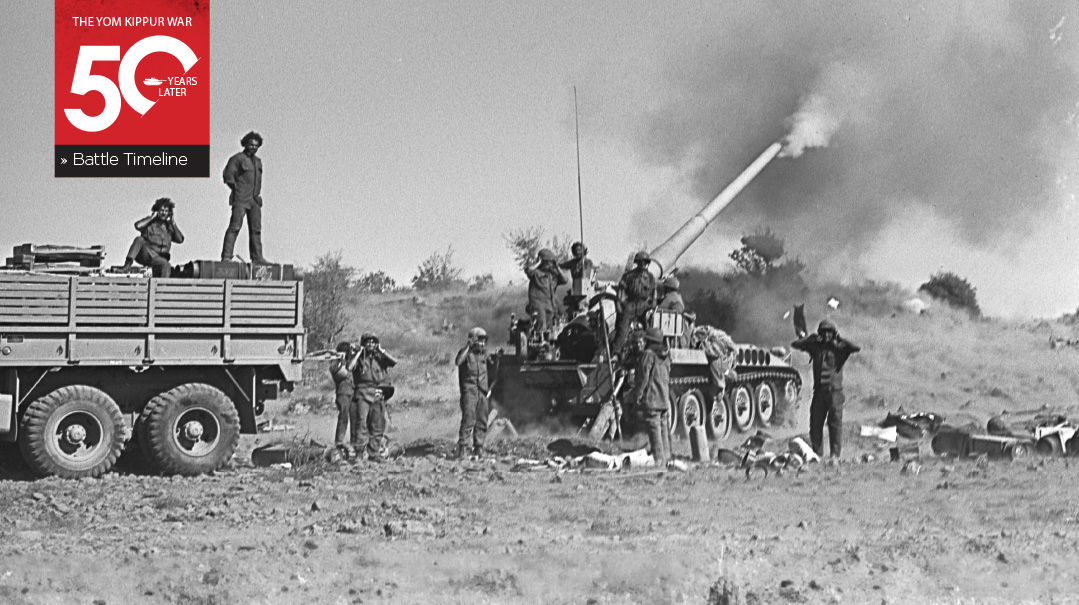
For the third time, Israel prevailed, but this time, the victory was more bitter than sweet. As the state commemorates the 50th anniversary of the war that broke out on the most solemn day of the Jewish calendar, we offer our review of the backdrop, the battles, some of the heroes and some of the goats, and how this war reshaped reality in the Middle East
IN many respects, the 1973 Yom Kippur War was Act II of the 1967 Six Day War, which ended in a miraculous Israeli victory over Egypt, Syria and Jordan.
In 1967, Israel had captured the Sinai, an area almost three times the size of New Jersey, from Egypt in the Six Day War. Israel also recaptured Judea and Samaria, its Biblical heartland, from Jordan, and the Golan Heights from Syria. The Sinai also has strategic importance, as its western border abuts the Suez Canal, one of the world’s most important shipping lanes. For a few short years, Sinai’s oil wells provided Israel with a level of energy independence it never had before. Refusing to accept defeat, Egypt led a coalition that included Jordan, Syria, and at times, the Palestine Liberation Organization (PLO) in what became known as the War of Attrition, attacking Israel by land, sea, and air hundreds of times between 1967 and the summer of 1970.
The War of Attrition claimed almost twice as many Jewish lives as the Six Day War and finally ended with a cease-fire in August 1970, which Egypt and its military sponsor — the Soviet Union — broke almost immediately by stationing surface-to-air (SAM) missiles in the Sinai Peninsula well past the agreed-upon cease-fire lines.
Create a free account to keep reading.